
For the first time in awhile I got to attend the New York Film Festival press and industry screenings in person (rather than just remotely) this September. A lot has changed since the last time I’ve been there. No director talks after the films. (Now they only appear at the public screenings.) Lots of young, internet-only writers. I saw a few veteran critics: Amy Taubin, J. Hoberman, Glenn Kenny and Manohla Dargis. Even longer lines for some films–I had to go to a second screening of “The Brutalist” after the line for the first ended just before me. Here, in no particular order (except for the first one) are my ten favorite films from the 63rd NYFF.
Sean Baker’s Palme d’Or-winning “Anora” received huge and deserved applause at the screening I attended. Baker’s previous work has addressed sex workers from an economic class point of view and here he expertly blends social critique with a hilarious, crowd-pleasing comic chase thriller.
Brooklyn sex worker Ani (a breakout performance by Mikey Madison)–short for Anora–is courted by Vanya (Mark Eydelshteyn), the young, impulsive son of a Russian oligarch. He pays her $15,000 to spend a week as his girlfriend in the luxurious house his parents own. Others soon join the 24/7 party and they fly to Las Vegas. Ani agrees to marry Vanya and this enrages his father who dispatches Vanya’s Armenian godfather and fixer Toros (Karren Karagulian) to kidnap the couple and have the marriage annuled.
Vanya flees as Toros and his two henchmen deal with a wildly uncooperative Ani as they roam through Brighton Beach in a desperate attempt to capture the prodigal son. The film’s tagline “A Love Story” prompts us to the irony that even in this supposedly transactional relationship (Ani receives $10,000 for agreeing to an annulment) there actually were feelings between the couple and an awkward sex scene later between Ani and the henchman who returns a wedding ring to her is a trenchant display of her still confused feelings. “Anora” is an update on classic screwball comedies that brilliantly combines laughs, thrills, sex, emotions, class and ethnic identities in what is Baker’s masterpiece.
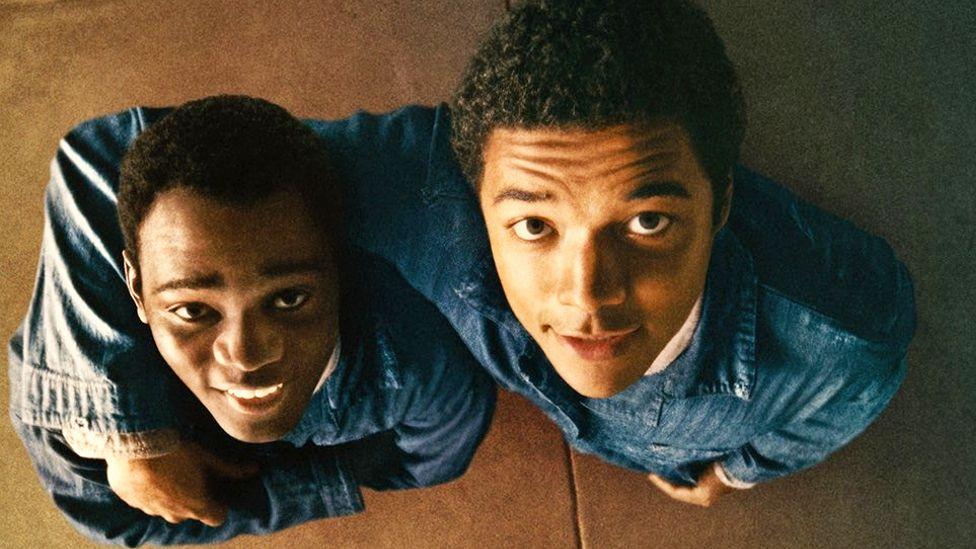
Director RaMell Ross’s adaptation of Colson Whitehead’s Pulitzer Prize-winning novel “Nickel Boys” employs a unique combination of not one but two first-person points-of-view that may bother some but whom most will hopefully find wonderfully immersive. Set in 1962 Jim Crow-era Florida, we follow the tragic story of promising young black student Elwood (Ethan Herisse). After hitching a ride with a car thief he is unjustly send to the Nickel Academy, a reform school where white students are treated well while black ones are ruthlessly exploited as contract labor and unable to be released until they reach age eighteen. Elwood befriends another black student, Turner (Brandon Wilson), who is more cynical about political change than Elwood. Elwood’s attempts to expose the abuses at the school result in him and Turner being brutalized. Years later Turner, in a surprising turn of events, helps the government reveal the truth about the many black students (including Elwood) who were killed at the Academy and buried in unmarked graves. The two leads give strong, affecting performances. Aunjanue Ellis-Taylor also gives a compelling turn as Elwood’s grandmother, who is refused access to her grandson when she visits and then later swindled by a lawyer she hires to represent him.

“The Room Next Door,” Spanish director Pedro Almodóvar’s English-language debut (and winner of this year’s Golden Lion at Venice), is based on a 2020 novel by Sigrid Nunez. The film stars Julianne Moore as Ingrid and Tilda Swinton as Martha, two estranged friends who reconnect after Martha’s terminal cancer diagnosis. The two women worked at the same magazine when they were young and Martha tells her old friend about the odd and sad events that transpired over the decades they have been apart. Ingrid is troubled by Martha’s decision to end her life with euthanasia pills and reluctantly accompanies her to a rented home in Woodstock, NY. There is none of Almodóvar’s outrageous humor here, instead it is very moving portrait of accepting fate with stellar performances by the two leads and rich, color visuals that suggest the melodramas of Douglas Sirk.
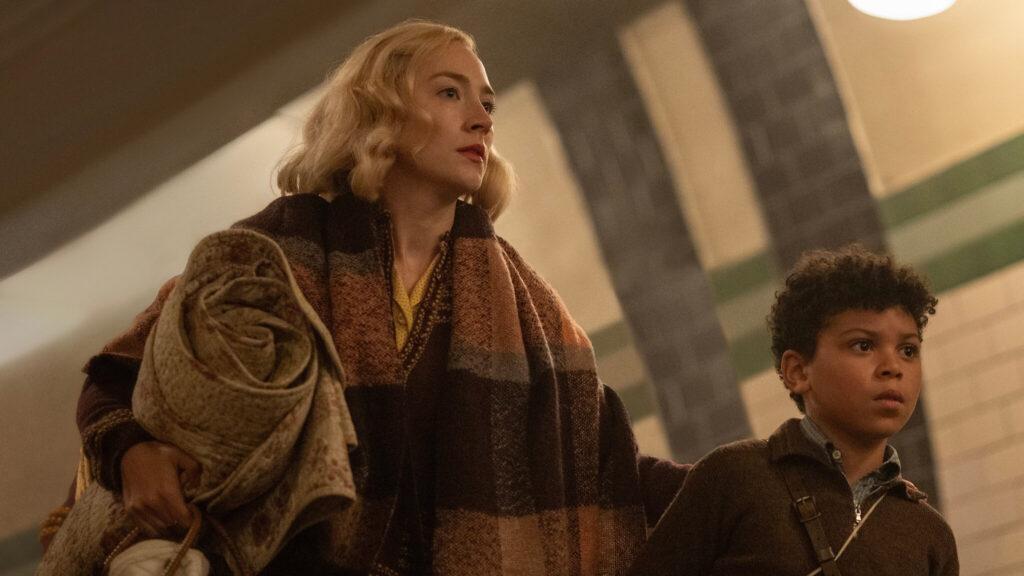
Steve McQueen’s “Blitz” follows a mother (Saoirse Ronan) and son (Elliott Heffernan) separated during the German bombing of London during the early years of WWII. Featuring rich performances, excellent cinematography and a great soundtrack by Hanz Zimmer, the son’s chaotic trek to reunite with his mother is exciting and heartfelt yet it just misses the kind of transportive elements that would make it truly memorable though it will definitely be on many best-of-the-year lists. With a wonderful supporting cast including Stephen Graham and Harris Dickinson and a surprise performance by musician Paul Weller as the boy’s grandfather.
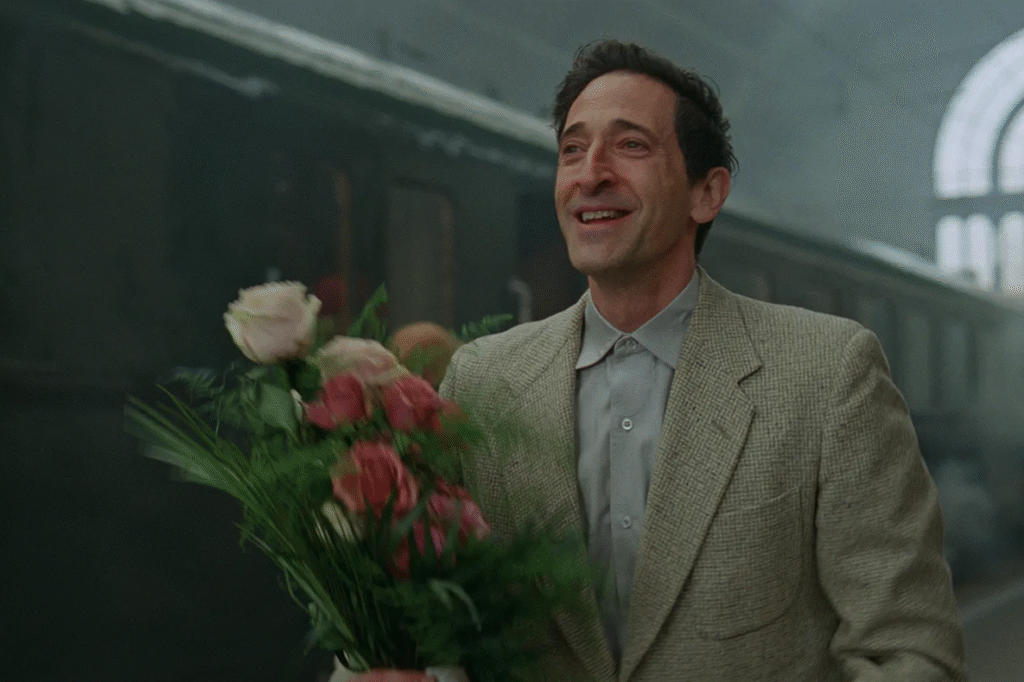
Brady Corbet’s “The Brutalist” is a two hour and 35-minute (including an intermission!) near masterpiece about a Hungarian-Jewish architect and Holocaust survivor, László Tóth (a bravura performance by Adrien Brody), who immigrates to post-war Armerica and experiences epic triumphs and failures as he attempts to achieve his unique architectural vision while trying to reunite with his wife (Felicity Jones) and niece (Raffey Cassidy).
After a sojourn with his furniture firm-owning Philadelphia cousin (Alessandro Nivola) goes awry because László’s redesign of a library for a wealthy industrialist (Guy Pearce) is rejected and his cousin accuses him of hitting on his wife, the architect becomes addicted to heroin while working as a laborer. A few years later the industrialist realizes the brilliance of the redesign and re-hires László to build a community center in tribute to his late mother and gets his lawyer to expedite the return of László’s loved ones. More tragedy awaits him as the industrialist’s anti-semitism and overbearing ego clashes with the architect’s refusal to compromise his artistic principles (shades of Ayn Rand’s “The Fountainhead” and Paul Thomas Anderson’s “There Will Be Blood”). An epilogue reveals that László’s talent was finally canonized as his niece quotes one of her uncle’s favorite sayings: “…it is the destination, not the journey.” (Contrast this with Ralph Waldo Emerson’s “It is the journey, not the destination.”)
“The Brutalist” has a rousing soundtrack, stunning visuals (it was shot in the VistaVision format from the 1950s) and an amazing cast. The only thing missing from its epic ambition is what Truffaut once called “the wind in the trees,” the seemingly accidental touches of lyricism that make characters seem real rather than literary conceits.
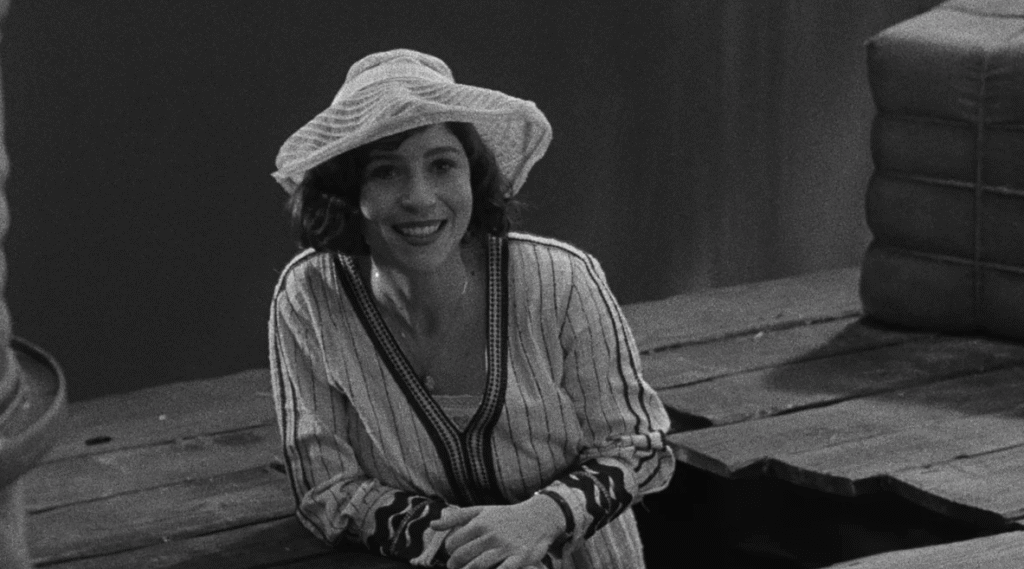
I don’t like Miguel Gomes’ new film “Grand Tour,” as much as his 2012 film “Tabu” but it is still a wildly original continuation of his unique visual and storytelling style. In 1918, a British civil servant, Edward (Gonçalo Waddington), abandons his fiancée Molly (Crista Alfaiate) on their wedding day in Rangoon. She traces his peripatetic travels in Asia, hoping to reconcile their relationship. Their separate journeys make up a madcap, idiosyncratic pastiche of colonialism and TinTin comics with a heavy dose of Guy Maddin’s aesthetics and fascinating anachronisms. Blending black-and-white footage shot on sound stages with 16mm footage shot on location, Portuguese director Gomes definitely deserved the Best Director award he won at this year’s Cannes Film Festival.

Marianne Jean-Baptiste gives a masterful performance in “Hard Truths.” Her character Pansy is a an extreme miserabilist, a London woman who complains constantly about everything, starting ridiculous arguments with everyone she meets, driving her quiet plumber husband and slacker son crazy. In contrast, her hairdresser sister Chantelle (Michelle Austin) is perpetually cheerful. Their mother died five years early and a celebration of her during Mother’s Day leads to huge drama (Pansy accuses Chantelle of being their mother’s favorite), brief happiness (an unexpected gift from her son), but no real resolution. Another masterpiece of genuine working class angst and passion from the great director Mike Leigh.
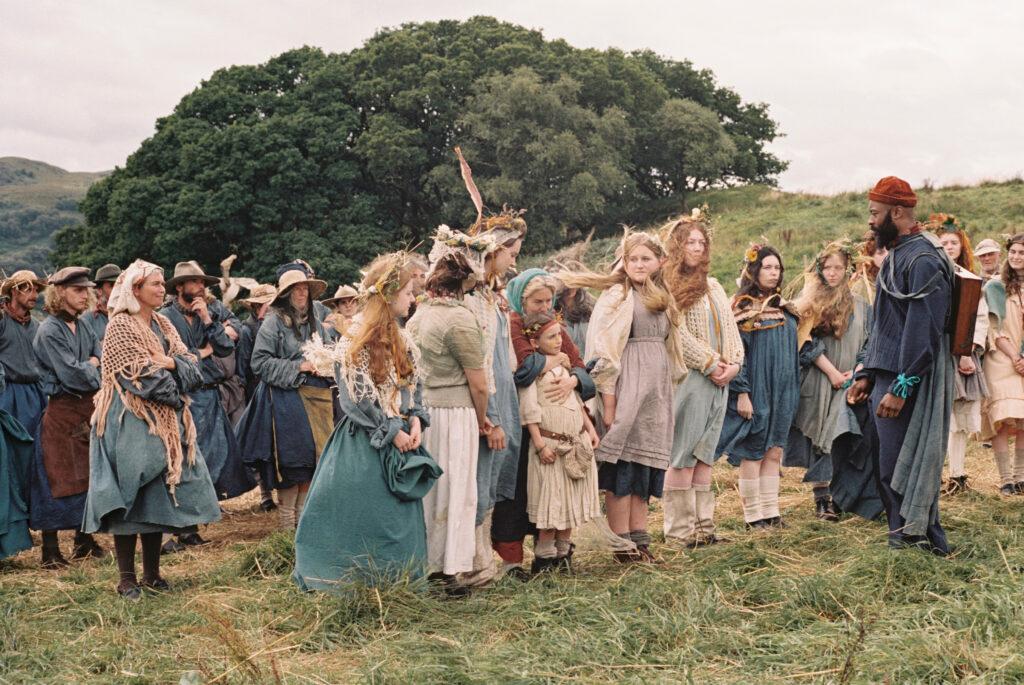
Athina Rachel Tsangari’s magnificent “Harvest” is a hypnotic feast for the senses in a 17th century Scottish village in which during a single week, people go from a true balance with nature to the neurotic divorce from it that may ultimately doom us, a clash invoked by the British Inclosure Act and the transition from feudalism to Capitalism. The gorgeous visuals are inspired by the work of Bruegel the Elder and Millet’s “The Gleaners.”

Palestinian activist Basel Adra and Israeli journalist Yuval Abraham worked together to make the stunning documentary “No Other Land,” which chronicles the displacement of Palestinians in Masafer Yatta, a region in the occupied West Bank. We see IDF soldiers shooting a Palestinian man for trying to protect his electric generator from being stolen by them. Bulldozers knock down Palestinian residences with impunity. The contrast between Yuval’s mobility and freedom and Basel’s constant fear of imprisonment and injury is striking. “One day you’ll visit me, not always me visiting you,” Yuval says to his co-director, hopeful for a end to Israel’s illegal occupation of the region. Enriched by Basel’s family’s 20-year archive of footage, this will definitely make the short-list for the Documentary Feature Oscar.
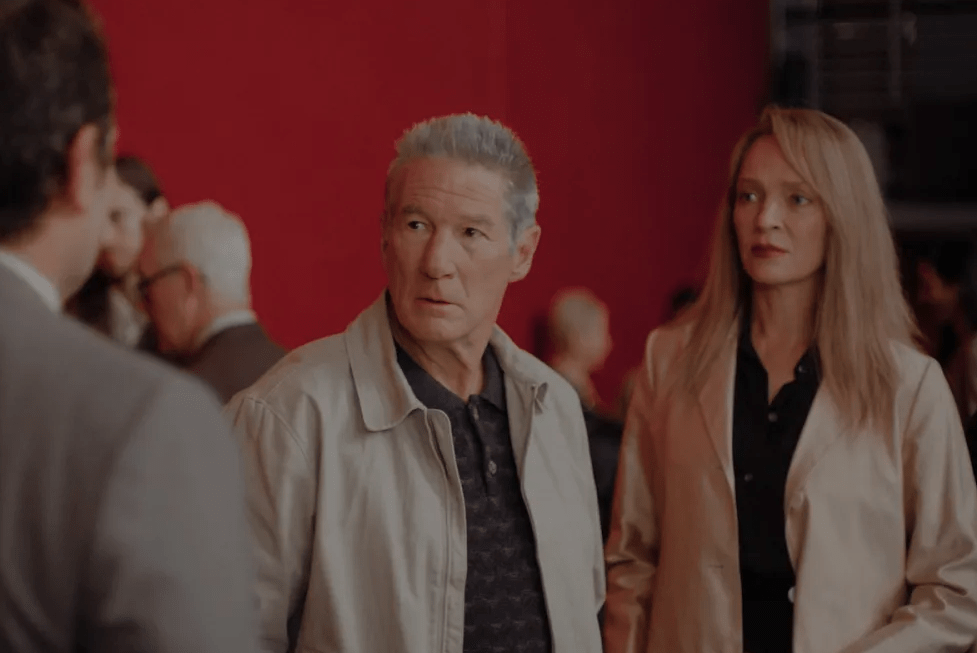
Paul Schrader’s “Oh, Canada” reunites him with two talents he has worked with in the past: Richard Gere (“American Gigolo”) and novelist Russell Banks (“Affliction”). Schrader’s script was adapted from Banks’ novel “Foregone,” in which a famous, dying Canadian documentary filmmaker named Leo (played by Richard Gere in the present and Jacob Elordi in flashbacks) agrees to take part in a documentary about his career (made by two of his former students) which brings up disturbing questions about his past. It turns out that Leo’s “heroic” dodging of the draft in the U.S. and flight to Canada were not purely acts of conscience and heroism and his treatment of romantic partners is shown to be very shoddy. The student documentarian (Michael Imperioli) uses a camera his teacher Leo invented (similar to Errol Morris’ “Interrotron”) which lets the filmmaker look directly into the eyes of the subject as he questions him. Gere turns in one of his best performances as an artist torn by the decisions he has made and the secrets he has kept from his current wife (Uma Thurman.)