
I got a press pass for the Woodstock Film Festival and my friend Adam Schartoff (host of the great–nearing 1000 episodes!–Filmwax podcast, WKZE DJ and a programmer for the Woodstock Film Festival) invited me to stay with him while I attended it. Here is my diary of my four days at what turned out to be one of the most fun and intimate film festivals I’ve ever been to. And it gave my roommate four days free of the lumbering bear. Here is the trailer for the festival:
Thursday, Oct. 16
This was my first time going to the Woodstock Film Festival and actually my first trip to upstate New York. I caught a Trailways bus ($40 each way) at Port Authority leaving early in the morning; it’s about a three hour trip. The autumn leaves arrive there earlier than in Brooklyn so it was a great treat to see the beautiful countryside on the way up, with stops in New Paltz and Kingston and other lovely towns. When I stepped out of the bus in Woodstock, only a few yards from the press badge pickup, I discovered that the legendary animator Bill Plympton had taken the same bus. (The festival is celebrating his 80th birthday.) Adam was there to meet me and we headed over to the badge pickup at the festival “hospitality house,” a small house on Tinker Street with tables for filmmakers and press to hang out between films with coffee and snacks and a media village for taking press photos of actors and directors. Except for a couple of exceptions most of the screening venues were within walking distance of this house.
I overheard someone complain that in past festivals the food at the hospitality house was catered instead of being just a collection of snacks. I guess, like all artistic venues, budgets have become tight during the near-fascist Trump years. As I am wont to do, I stuffed my pockets with treats to eat at screenings to avoid paying the high cost of concessions.
After coffee and bagels we walked to the Tinker Street Cinema (132 Tinker Street) and ran into our friend Onur Tukel, who is showing his latest film at the festival. Onur remarked on how I looked ten years younger than the last time we met because of my recent weight loss and newly trimmed beard. Onur, whose parents are Turkish but he grew up in North Carolina like me, is a very nice man, a mensch and a great filmmaker and actor. But he still won’t read my screenplays.
Onur invited Adam to join him to go buy a birthday cake for the star of his film (Paul Sparks) and I continued on to see “Rehearsals for a Revolution.”

The poster above is a powerful illustration of the themes of this film by Iranian actress-turned-director Pegah Ahangarani. She narrates a poetic and often shocking account of her life in Iran from the 1975 revolution to the 2009 massacre and (after she had moved to Berlin) the January 2026 massacres.
Her father was an amateur filmmaker who fought in the Iran/Iraq war and was later jailed for criticizing the Iranian government. Her mother is Manijeh Hekmat, a prominent Iranian film director who, after working for years as an assistant director, began directing film in 2002 with the acclaimed film “Women’s Prison.” Hekmat used Pegah as an actress in many films.

The film is divided into five sections with captions afterwards explaining the sad fate of the people depicted. She tells the story of her father, then a beloved teacher whom she inadvertently caused to be fired. Her uncle Rashid was also critical of the government and was executed. Pegah campaigned for Mir Hossein Mousavi, a 2009 opposition leader. The last chapter is dedicated to her daughter.
Using a wealth of archival footage and haunting sound design, Ahangarani shows how all of her friends and family kept their spirits alive through years of dashed hopes and cruel repression. These people, Pegah says, “taught me to endujre and to rehearse every day for the day of freedom.”
“Rehearsals for a Revolution” won the “Golden Eye” documentary award this year at Cannes and won the Best Documentary award at Woodstock.
Back at the hospitality house, I learned that Adam and I wouldn’t be able to stay for the Q&A for the new Tim Blake Nelson film (because he was obliged to moderate a Q&A for another film at the same time) so I suggested we go across the street to the Golden Notebook bookstore (29 Tinker Street) where Tim Blake Nelson was doing a book signing for his latest novel “Superhero.” I felt bad about not buying a copy but I’m on a tight budget.
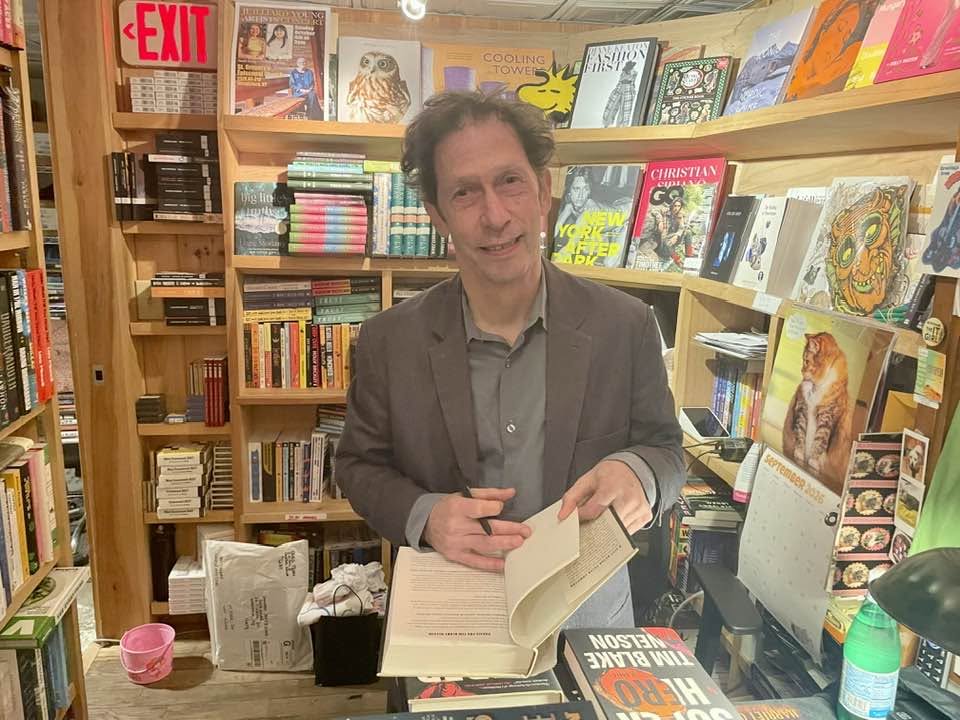
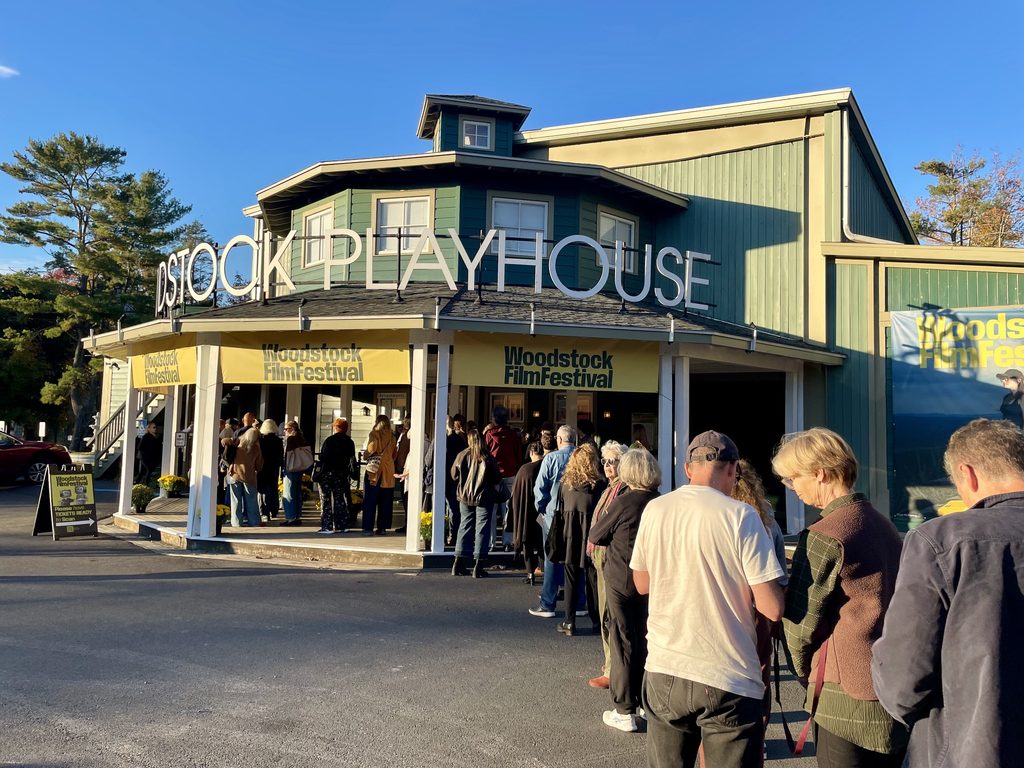
Nelson is nothing like the scary or dodgy characters he often plays in films; he is a lovely and learned man. “The Life and Deaths of Wilson Shedd” screened at the beautiful Woodstock Playhouse (103 Mill Hill Road).
(SPOILERS ahead.) Based on actual events, Nelson’s film is a grim prison drama about a literature teacher Karen (Amanda Seyfried) teaching a creative writing course for some hardened criminals. Wilson (Scoot McNairy), in for murder, tries to protect her from some of the sexist and rapey comments the other convicts make. Karen is impressed by what a good writer the uneducated Wilson is and breaks the rules by letting him write her personal notes that become love letters. She begins smuggling tools into the jail to help Wilson escape. (His attention is welcome because of the abuse she has received from her n’er-do-well husband.) But she doesn’t understand he is manipulating her and once Wilson and others escape a shockingly violent scene (think of Flannery O’Conner’s short story “A Good Man is Hard to Find”) Karen discovers that she will go to jail herself.
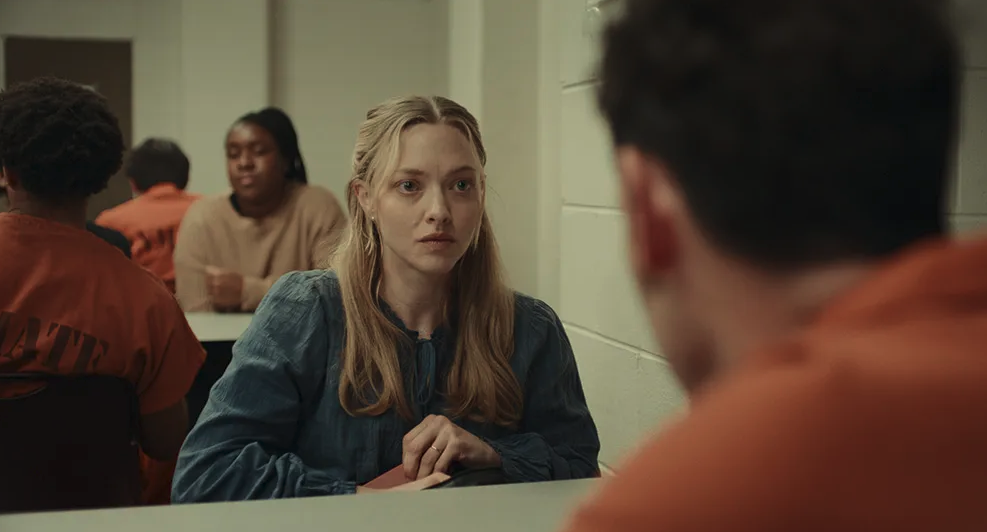
The final section of the film involves a botched execution of Wilson, a scene that couldn’t be more topical with the recent problematic executions in the news. The performances and filmmaking are all great here but the extreme violence may be too much for some and Karen’s naivete is sometimes hard to believe (though Seyfried makes it mostly believable).
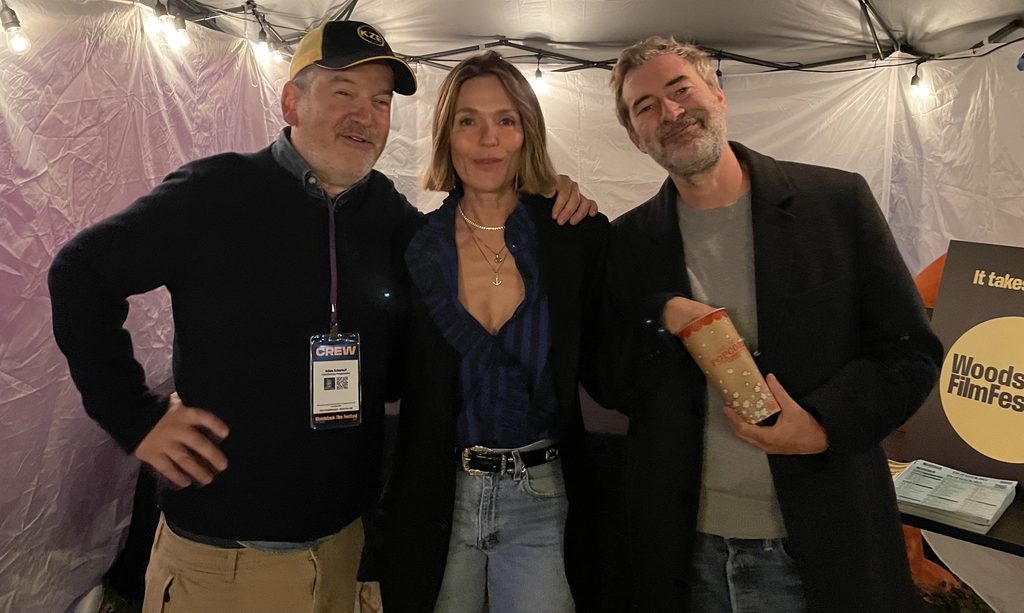
Then we rushed back to the Tinker Street cinema where Adam was slated to do a Q&A for “Their Town,” a film written by Mark Duplass and directed by his wife Katie Aselton. We got to hang out with them outside for awhile before the film ended. Katie offered me some Red Hot candies she got from the concession stand. “They seem dusty,” she observed. I’m embarrassed to admit that haven’t seen much of Duplass’s work and I had never heard of Aselton so I didn’t have much to offer conversation-wise and let Adam take the lead. (Note to self: “Watch ‘The Puffy Chair.'”)
I haven’t seen the film yet but the crowd included some local celebrities, like Tony Shaloub and his wife Brooke Adams. By the way, none of these screening venue concession stands offered beer, which seems to be a big attraction for those who go to art houses these days.
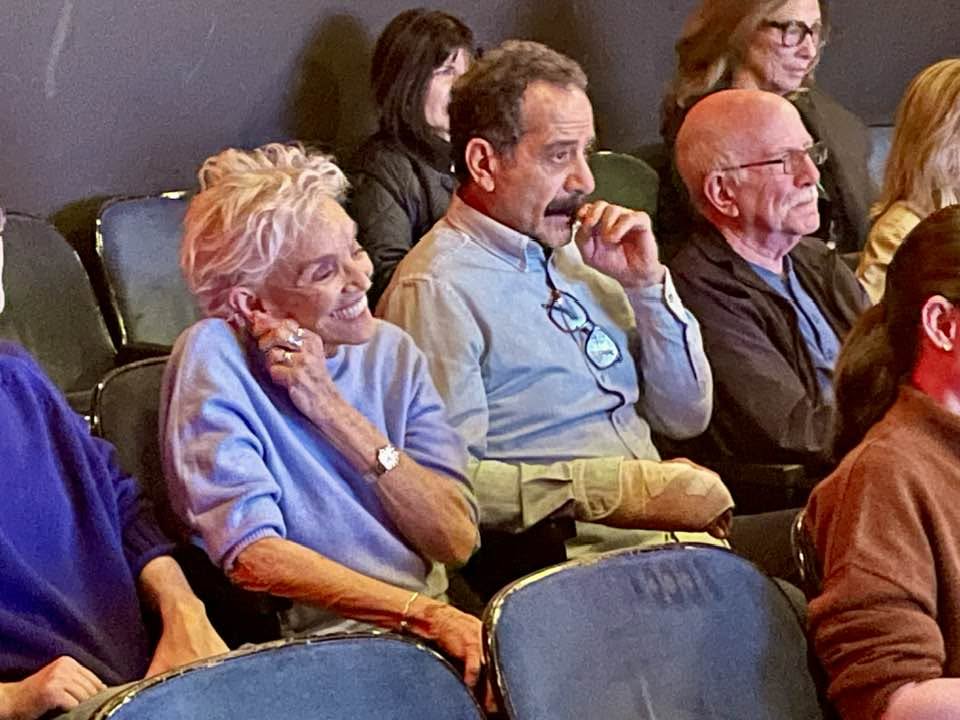
We were both tired so we didn’t go the festival party that night and went straight to Adam’s place in Athens. I finally got to meet Adam’s lovely girlfriend Christina, who grew up in Denmark. We talked to her about the Tim Black Nelson film since she, like Seyfried’s character in the film, teaches literature in prisons. Their dog Freddy took an immediate disliking to me; they told me it takes a long while to gain his trust.
Friday, Oct. 17
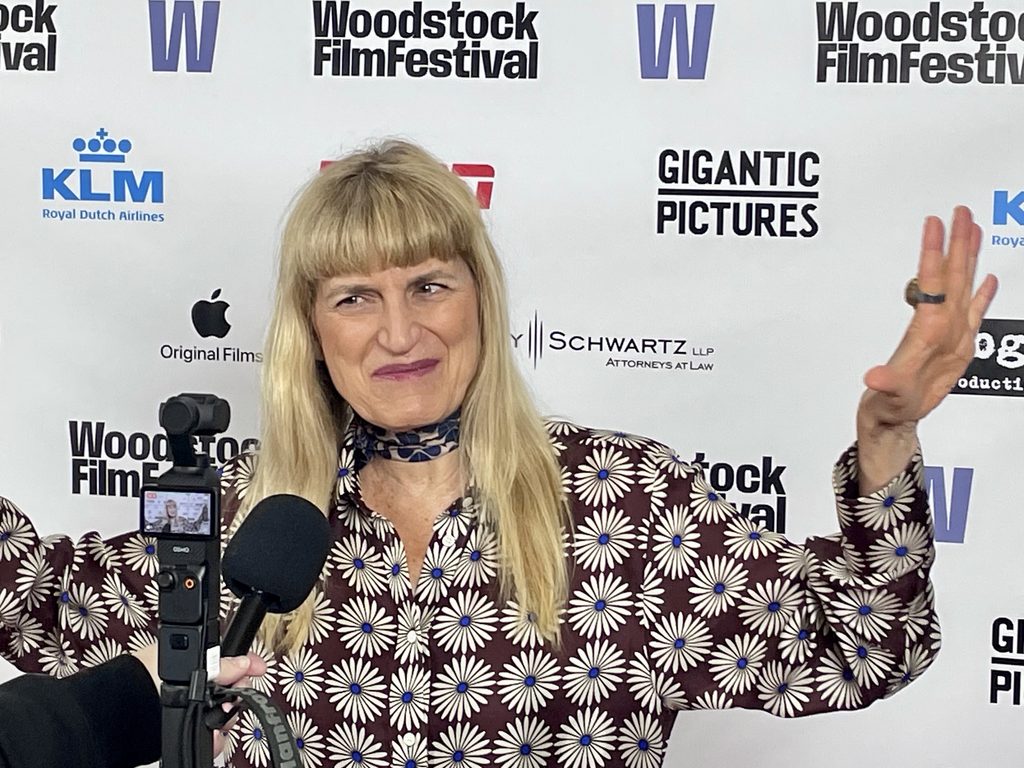
We have to rise early every day to get to events Adam needed to host. Today he would be manning a booth in the media village and conducting short interviews with filmmakers for WKZE, the Red Hook radio station he DJs for. (I also work for them as a web developer.) First up was Catherine Hardwick, who directed “Thirteen,” “Lords of Dogtown,” “Twilight” and many others. She is screening her latest, “Street Smart” at the festival. It’s about unhoused skaters and indie musicians living in Venice, California.
During an interview with Corbin Bernson (the “LA Lawyer” actor who is so good in the current show “Our Friends and Neighbors”) I told him how much I liked him in the recent series “Duster.” He went off on a wonderful tangent complaining that, despite great reviews, the series was not renewed and I agreed. Bernson showed the pilot for a series he stars in called “Woodstockers” at the festival.
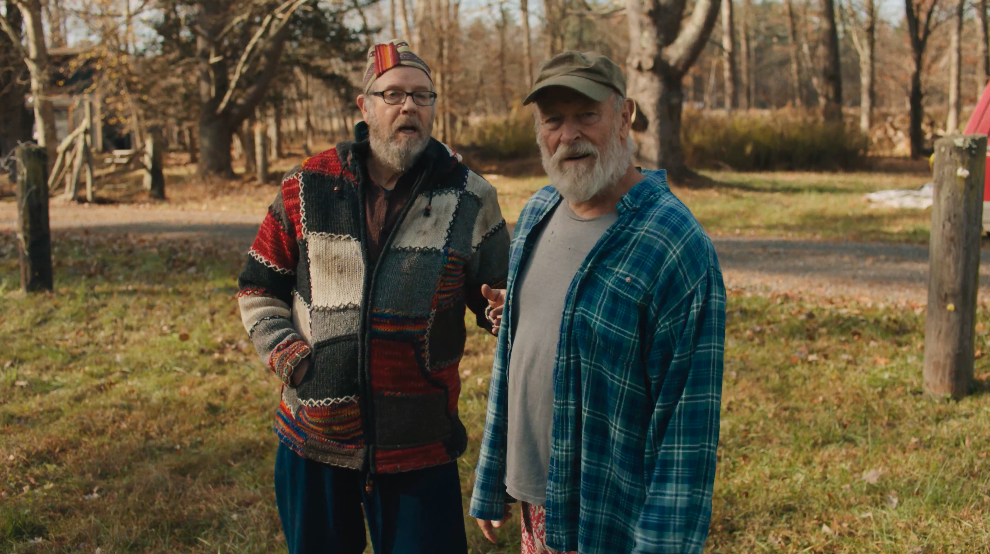
Bernson created and stars in the series and three of his sons worked on it: Oliver directed the pilot and Henry and Joshua worked on the script. It’s about two friends, Lenny (Bernson) and Calvin (the always great Stephen Tobolowsky), who hitchhiked to the Woodstock Music festival in 1969 and stayed there (that is, Woodstock, NY) the rest of their lives. (The festival was held in Bethel, which is about 60 miles from the village of Woodstock). They both became successful: Lenny as a musician and recording studio owner, Calvin as a quirky alternative lifestyle entrepreneur, currently building a teepee (“No, a cone tent!” he corrects Lenny) commune.
Now in their late 70s the two are suffering from a few existential issues. Calvin suddenly becomes very ill and dies (it was perhaps precipitated by overzealous sex with his wife!) and Lenny’s wife (Barbara Hershey) has gone to Malibu to take a break from their marriage and hopefully resuscitate her acting career. Lenny is also unexpectedly visited by his daughter Alice (Maggie Lawson) who complains of his bad parenting and his current deadbeat lifestyle as an unrepentant hippie doper.
Calvin (who dies sporting a huge boner!) returns from death at times to give advice to his old friend. “A little late for a mid-life crisis,” he observes. “Woodstockers” is very funny, with a wonderful cast of aging hippie characters giving shade to the youngsters in town, a wonderfully wry yet heartfelt performance by Bernson, cool needle drops, and then there is always the natural beauty of Woodstock itself. I want to see more and hope it gets picked up by a network soon!
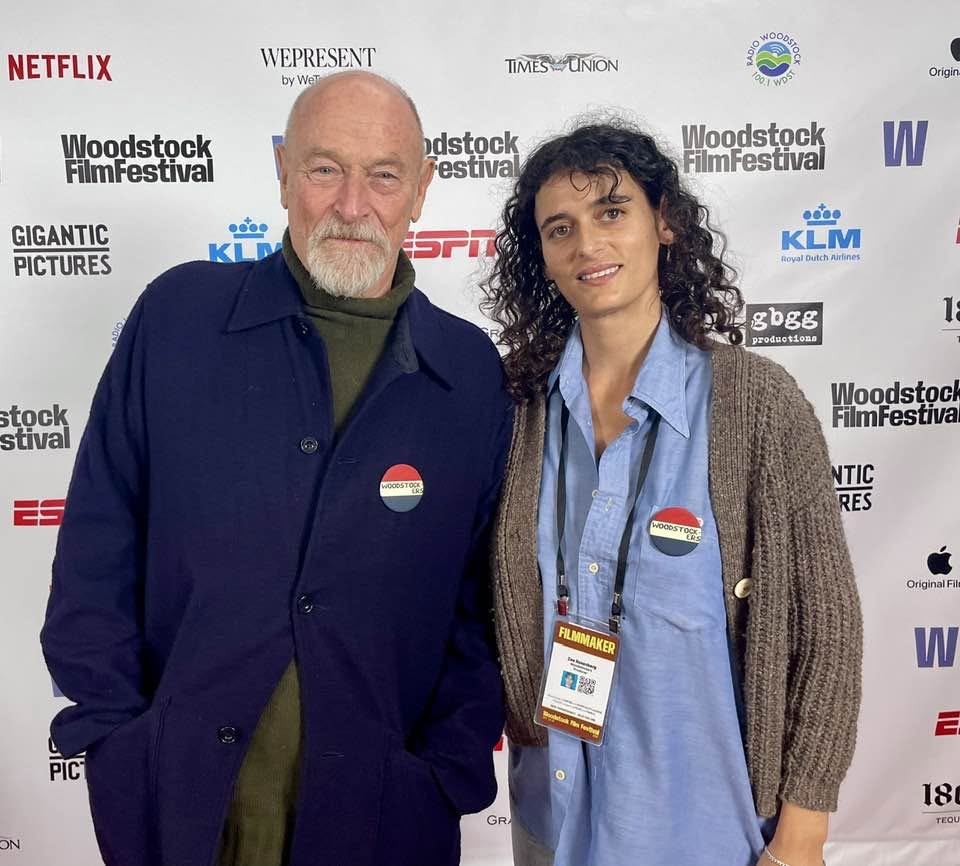
Corbin Bernson with “Woodstockers” producer Zoe Rosenberg. (They gave me one of those buttons!)
Adam also interviewed Matthew Dougherty, who is showing his great documentary “The Natural State” at the festival. It’s about an American woman, Julie Thayer, who traveled to India in the 1980s to study with a mystic named U.G. Krishnamurti who by this point was very unwelcoming to potential students. I’ve already seen and reviewed it. I did a short interview with Dougherty myself later.
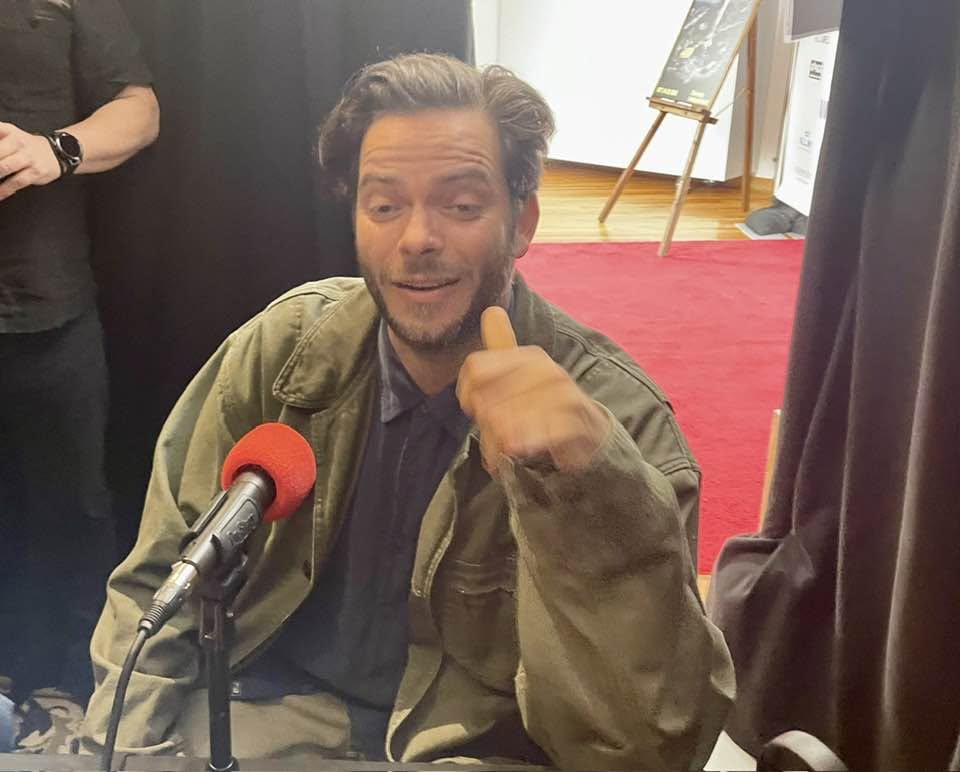
Interview with Matthew Dougherty
I don’t know if you read my review of your film, but one of the characters that reminds me of Krishnamurti as an anti-guru is in “The Life of Brian.” The reluctant Jesus-figure Brian tells his acolytes,”You have to just figure it all out by yourself.” And then there’s Chauncey Gardner in “Being There”–his naive words being treated like wisdom.
Of course. [Gardner] was a big reference for me.
You saw that Marjoe Gortner died last week?
Oh Marjoe. They made a documentary about him in the 1970s? It was a short?
No, it was a feature film. It won the Best Documentary Oscar in 1972. Marjoe said that he learned his hysterical evangelistic moves from watching Mick Jagger perform.
Oh, yeah. He was a four years old. I am not sure if it’s what you were getting at, but there are all these films and videos of different Christian evangelists, and the laying on of hands, and people will go flying or pass out, or maybe even be cured of something, so the placebo effect is very powerful, but just because the placebo effect is so powerful, is that all there is, or does that mean that all teachers are just the placebo effect, or is there something beyond that? And so the film is kind of trying to interrogate that.
Did you ever meet Julie Thayer?
Julie’s a dear friend. I know her well.
What were some really good documentaries you’ve seen in 2026?
My memory is always terrible. I watched “Rehearsals for a Revolution.”
I saw that too and loved it. You saw it here?
Yesterday’s screening. Devastating.
Did you see “NAZA” yet?
No. I really want to see it!
I think it’s playing here in the area, and it might be in New York. Have you seen the “Musk” doc yet?
I heard that is good. People were talking about it yesterday.
What are you working on next?
More narrative scripted projects. One about World War II and Indian mysticism.
That’s a fascinating combination! Before making “The Natural State” had you been to India?
I lived there for a year. I spent a lot of time Mumbai, Bangalore, all around.
How would you describe your spirituality now?
Now, I just try to occasionally tune my focus inwards and enjoy the feeling of being alive.
Are you a fan of Alan Watts?
I am, yes. He’s an interesting guy.
I just read his “The Wisdom of Insecurity.”
Yes, I like that book. But he’s also a character. He kind of became a drunk and a boozer, and at the end–it happens, you know? But the thing that often separates, mysticism or, you can say, Eastern spirituality from Western is how you live. Is it just words, or do these ideas function in your life? And so when you hear things by Alan Watts, you do wonder–it’s easy, he’s so eloquent, but to actually apply that is a whole different beast. And sometimes we can do it for a couple months, a couple days, but, like, for that to be your life condition, it’s a different thing.
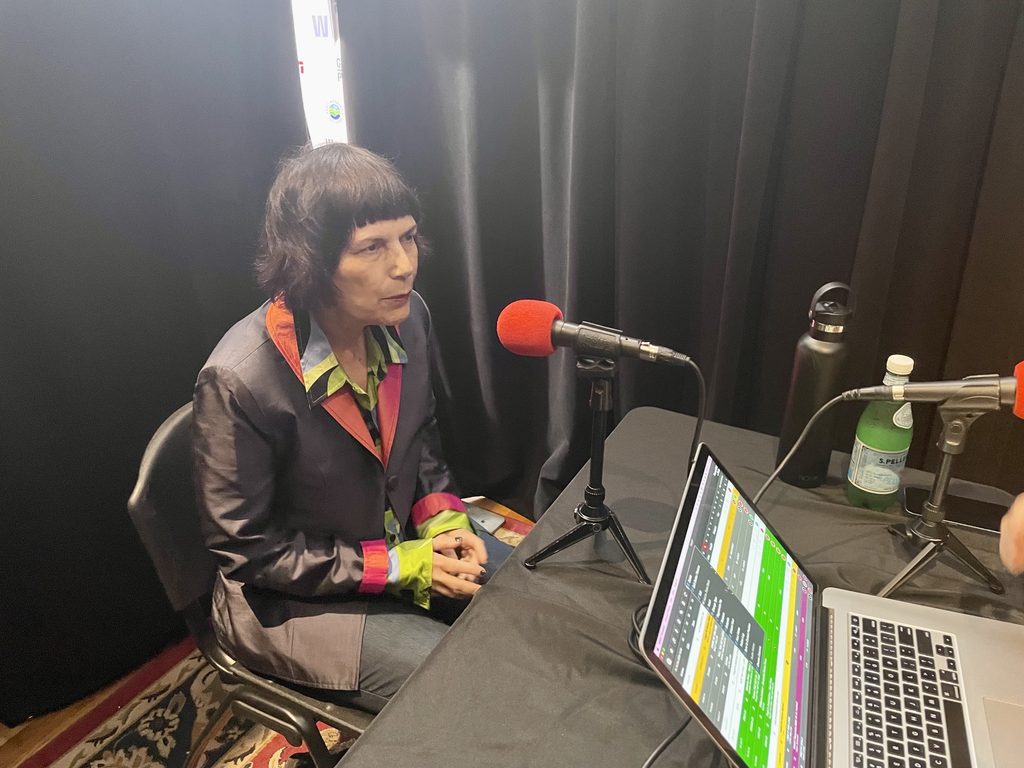
Adam also interviewed Meira Blaustein, who has been the festival’s executive producer for 26 years and is stepping down this year. The video shown before each film at the festival included a thank you to her at the end which was greeted with applause at every screening I attended. Watch Adam’s Filmwax podcast interview with Blaustein.
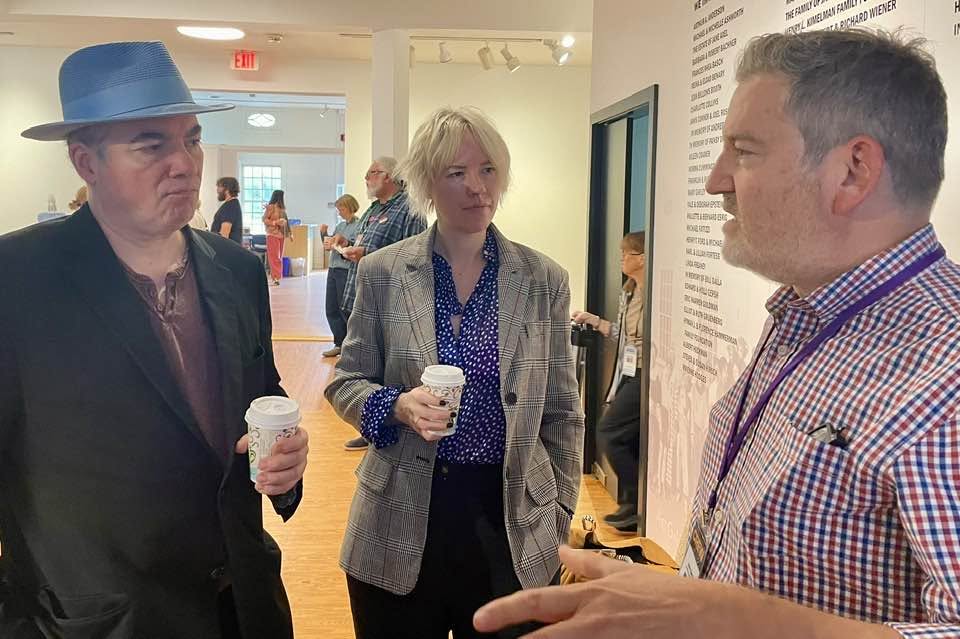
Adam spoke with actor Kevin Corrigan (who has been on his podcast a number of times) and illustrator Joan LeMay. Joan did the illustrations for a book coming out next month named “Friends of the Devil” about people named in Grateful Dead songs. You can pre-order it here.

We didn’t make it to the “Democracy in Documentary” panel hosted by Amy Goodman. Or rather we did but the venue wasn’t allowing late entries. While back at the hospitality house I met filmmaker Zonia Pelensky who is showing her new short “Expulsion” at the festival. It was being screened while I was at a different film so she sent me a screener link. This beautifully shot (the cinematographer is Ella Gibney; daughter of Alex?) and acted film is about Sonya (Ariela Zeig), a young girl accompanied by her mother (Jemima Kirke) to the consecration of the Easter Basket at the Ukrainian Catholic Church in the East Village. As she changes into a traditional Ukrainian dress in the church bathroom, her mom urges her to urinate into a sample jar she must turn in to stay in her heroin addiction program. Sonya is visibly resistant to this, perhaps torn between her duties to her mom and to the church. Meanwhile, Father Serge tells her that she can’t participate unless she has a required basket offering (meet, eggs, bread, salt). The film is capped by Sonya’s delightful fantasy of taking part in a traditional Ukrainian dance (performed by the Syzokryli Dance Ensemble). Pelensky is also an actress who played opposite Robin Tunney in Apple’s series “Dear Edward” and opposite Griffin Dunne in the 2020 film “One Night Stand.”
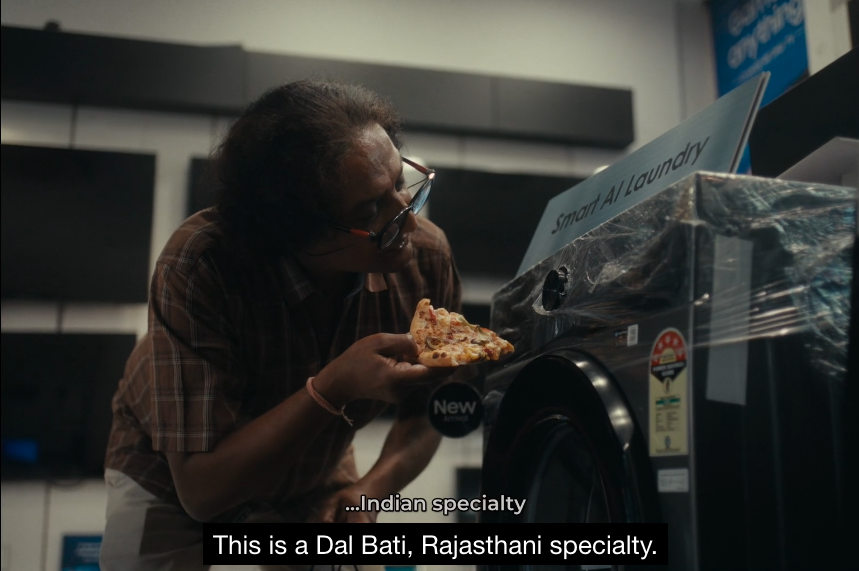
Another short at the festival I missed but got to watch later is “We Were Here” directed by Pranav Bhasin and included in the “Hilarity” short film showcase. Three retired Indian men go to war against robots and AI in comically unconventional ways. They replace appliances with their bodies: one becomes a human satellite dish, one a microwave, one a security camera. Mr. Pimple (Dvendra Dodke) recalls the time washing machines* were first available–his mother refused to get one even though clothes washing had hardened the skin on her hands. “I can buy a washing machine,” he laments, “but I can’t buy a mother.” Pimple is alarmed when his son (Shubham Kujur) takes a job for an AI company. His son tells him he doesn’t know anything about AI or him; for example, he doesn’t know that he is polyamorous. “You’re polyester?'” his dad replies. They try to make AI unreliable and hence unpopular by, for example, showing it a slice of pizza and saying it is “Dal Bati!”
This is a wonderfully acted and directed, very funny and droll film about a subject that couldn’t be more dire and topical today.
*In his 2010 book “23 Things You Don’t Know About Capitalism” Ha-Joon Chang points out that the introduction of washing machines changed the world more than the introduction of the internet because they freed up women’s domestic chores so much, allowing them to engage in other activities.
Back at the Tinker Street Cinema for a screening of “The Plea,” a court drama that, like the classic “12 Angry Men,” begins after the trial as twelve jurors are divided in their opinions and struggle over several days to render a unanimous verdict. It’s also filmed in black-and-white (DP Tinx Chan) which lends the action even more gravity and makes up for some of the minimalistic sets.
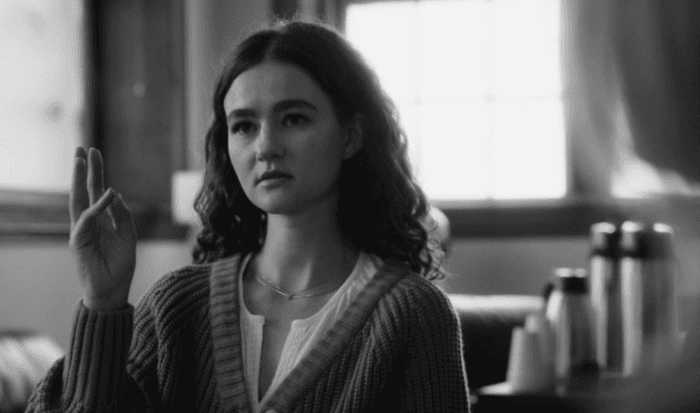
Two of the jurors are played by the film’s writer/directors. Dean Imperial (Juror 1) is a loutish, politically incorrect Jersey guy (he sounds just like Tony Soprano) who offends everyone from the start but gradually earns their respect. (Turns out he knows sign language and can communicate with deaf Juror 6–Millicent Simmonds of the A Quiet Place series). As Jury 10 and roommate to Juror 1, Zach LeBeau is the gay foreman, a stickler for detail who accuses his roomie of not washing his hands after visiting the bathroom based on how quickly he emerges after flushing. The always wonderful Dennis Boutsikaris (“Better Call Saul,” “Sugar”) is Jury 12, a thoughtful but struggling unemployed widower.
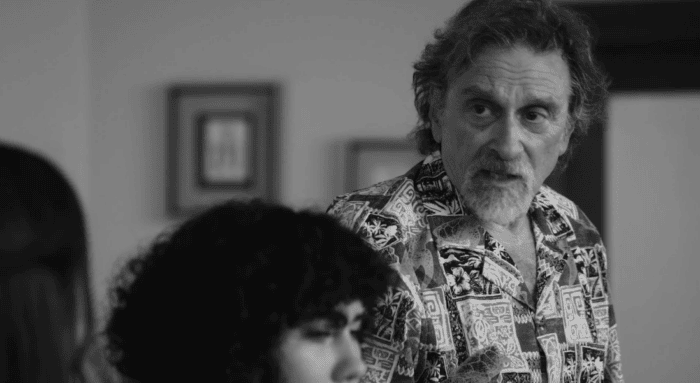
Juror 7 (Antoinette Crowe-Legacy) is the most agitated of the twelve and sets out to identify the jurors who are rendering guilty verdicts. (The defendant is a lab employee who accidentally dropped some donated embryos. The state law considers that manslaughter because the embryos have “personhood.” Protestors are heard chanting loudly outside the courthouse.)
After several days of interactions between the jurors in their rooms and at the hotel bar, minds are changed and there remains only one holdout. Everyone expects that Juror 8 (Kathryn Erbe), a Christian “lifer,” is the holdout. But could it be someone else? A few scenes drag a bit but overall the acting is excellent and there are some nice surprises. And I got to tell Dennis Boutsikaris how much I loved him in “Sugar!”
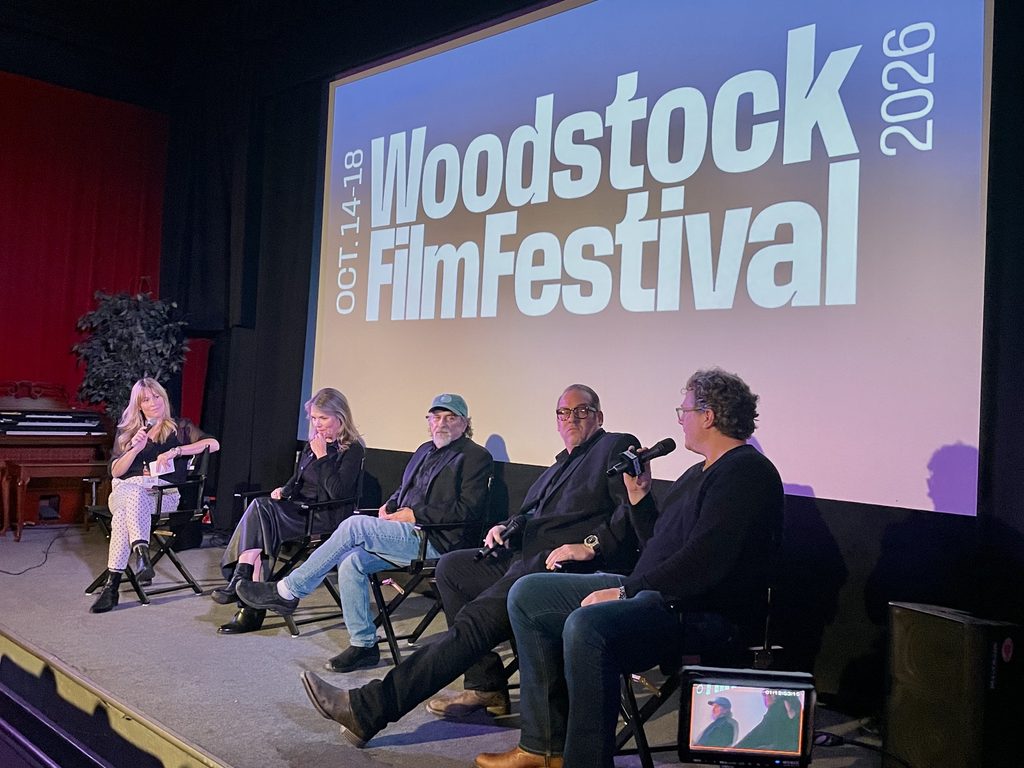
(left to right: festival host, actors Kathryn Erbe and Dennis Boutsikaris; writers/directors Dean Imperial and Zach LeBeau)
Next up at the Tinker Street Cinema was the World Premiere of Onur Tukel’s new film “A Company of Thieves.” I first met Onur in 2012 when my brother Randy acted in his film “Richard’s Wedding.” I love that film (and not just because my brother and Adam Schartoff are both in it); it’s very funny and charming and so many of the actors are also young New York filmmakers themselves who went on to make more films: Josephine Decker (“Madeline’s Madeline,” “Shirley”), Dustin Guy Defa (“The Adults”), Jamie Dobie, Lawrence Michael Levine (“Wild Canaries,” “Black Bear”), Jennifer Prediger (“Apartment Troubles”) and Oona Mekas. (Mekas is the daughter of the legendary experimental filmmaker Jonas Mekas and I got to hang out with both of them after a screening of the film at BAM in 2013.) It’s a key film in the birth of what became a micro-movement for the circa 2010 generation of New York indie filmmakers.
Onur is an talented director of both horror/comedy and satiric comedy films. He’s directed 16 movies including: “Summer of Blood,” “Applesauce,” “Cat Fight,” “Black Magic for White Boys,” “The Misogynists,” “Scenes From An Empty Church,” “That Cold Dead Look In Your Face,” and “Poundcake.”
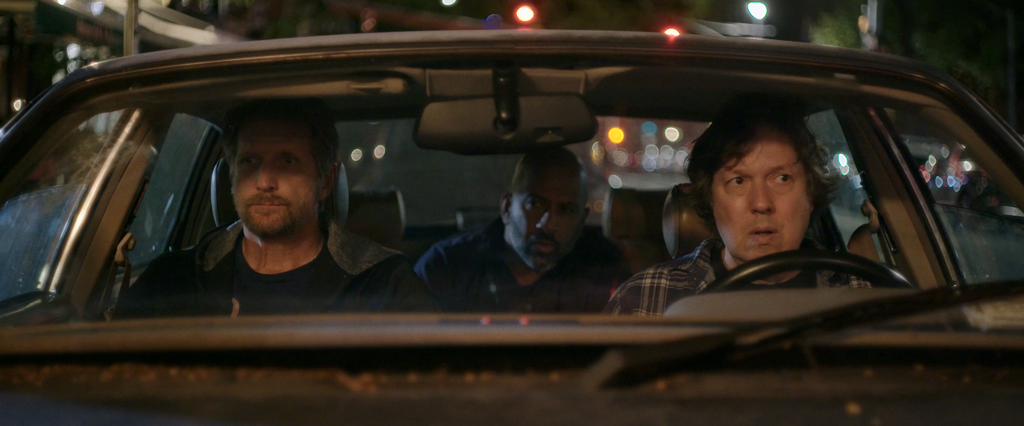
At the screening of “A Company of Thieves” the audience applauded when the curtains widened to accommodate a wide-screen film. (The cinematographer Giacomo Belletti later confirmed to me that it was shot in 2:35:1 anamorphic–not a common aspect ratio for low-budget indie films! “Epic comedy,” Giacomo pointed out.)
The film begins with Larry (Eddie Kaye Thomas), head of customer support at a Manhattan tech company, hiring Max (Paul Sparks) to fake a robbery at an upcoming company casino event. He’ll give him $75,000 to do this so he can intervene and become a hero to his co-workers. Max brings along bungling driver Pete (Dave Hill) and Dennis (Ajay Naidu), who is convinced that robots are among us. There’s a hilarious bit about Pete not wanting to wear a pink woven mask and a surprise cameo by someone whom Dennis is convinced is a robot following them.
The action is interrupted several times as the members of the tech company introduce themselves in what appears to be a promotional video. The CEO announces “My name is Glenn and this is my company.” Glenn (Jamie Block, a Tukel regular) loves his company so much he repeatedly turns down a lucrative offer from a corporate raider (Hanna Mae Lee).
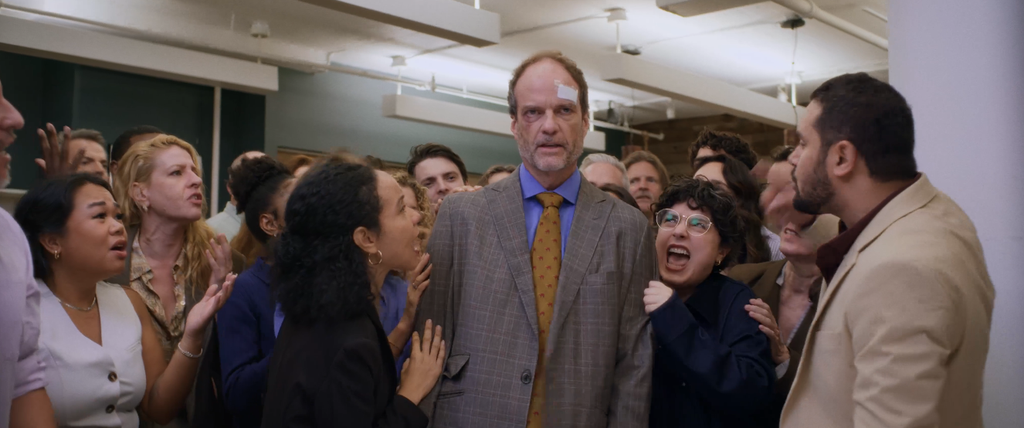
Meanwhile, Pete tries to stop his niece from dating a doper loser and Max and Dennis try to steal a million dollar cock ring called a “Prince Albert” from Sal (Ronald Gutman, who previously starred in Tukel’s film “Black Magic for White Boys”).
Onur asked me to not include any spoilers in my review so that’s all I can say about the story. What I can tell you is that “A Company of Thieves” is hilarious from start to finish, a trenchant critique of AI, and it is also a heist film with the stylistic and technical levels you expect from a Steven Soderbergh movie. And the actors are all superb. The film doesn’t have a distributor yet but I hope you all get to see it soon.
Interview with Onur Tukel
What previous work by Paul Sparks inspired you to cast him as the lead in your movie?
I was familiar with Paul’s work in a number of films and TV shows but when I saw him perform in an off-broadway production of “Waiting for Godot” it floored me. His portrayal of Vladimir was unhinged and hysterical. Then I saw him in another great play called “Grangeville” and it was a 180-degree shift. He played this blue collar guy who on the surface looks dim and bigoted, but he’s actually really sweet and complex underneath. I knew at that point, Sparks could play anyone. Luckily, he liked the script and was available. Incidentally, Ajay Naidu, who plays his partner Dennis in the movie, was in that same production of “Waiting for Godot”, but I’d met him years before. They seemed like the natural fit for playing partners in crime. They’re both brilliant.
I loved how you depicted the company as the rare tech firm where everyone is almost utopically happy until AI threatens them. But of course, all must have not been right in paradise earlier if Larry went to such lengths to get appreciation from his colleagues, right?
I remember someone saying that “New York City” can be the loneliest city in the world. It’s really true. There are people everywhere but if you haven’t found your people here, the isolation is amplified. I think that’s Larry’s predicament. He’s at a great company with amazing employees who are fulfilled and secure, but he just can’t connect with anyone. He’s obsessed with superheroes, and feels like faking a robbery is a fairly safe way to live out this hero fantasy while winning over his colleagues. Of course, by the end, he’s faced with a very real existential threat–AI. Does he have what it takes to be a hero for real?
Additionally, I wanted the company SmartTech to be this idyllic work community. Everyone loves their jobs. They love the office culture they’ve built. They love working together and the synergy that comes with that. If you love the people you work with and you believe in your mission, work is a gift, not a chore. I’ve enjoyed every office job I’ve had (and still do). Work provides meaning; it gives humans a purpose. Which is why this aggressive push towards AI is both demeaning and dehumanizing. And the hubris of tech giants, promising this great future with “universal income” and “more leisure time,” as if we’re all longing to be unemployed–it’s sickening. I was hoping to convey the absurdity of that conceit in the layoff scene.
Was this film easy to finance? Is getting your films funded easier as your resume grows or is just the same?
I’ve made 16 movies and my only real success was “Catfight.” It got into a major festival and the financiers sold it to Netflix. That was ten years ago. The budget of that movie was $350K. A few people told me that after that, my budgets were going to increase and eventually I’d be making million dollar movies. Instead my budgets decreased. They decreased to $125K to $75K to $50K to $20K for a movie I made a few years ago called “Wooden Hearts.” “A Company of Thieves” is the first decent budget I’ve had since “Catfight.” I’m very grateful to the executive producers who raised the money, but no it’s not easier. It’s harder.
Were there any specific challenges making this film in terms of locations, resources, lighting, etc. How many days did you shoot?
It was a 12 and 1/2 day shoot. The entire movie was a challenge. There was a new location every day. We’re working with firearms so that has its own challenges and regulations. You need permits and the NY police on set when you’re working with firearms. The NY police unit for film were great, by the way. They were absolute sweethearts. But man, we had to be dialed in to get this thing in the can. We had two hours to shoot the robbery spree on the Lower East side, which includes a bodega, two shoe stores and a wine store. We shot the casino robbery with all the company employees (over 30 awesome actors) in one day. Then we shot all the office scenes with all the same actors in one day. We had three hours to shoot the “Prince Albert” bathroom heist. It was all intense. When you have such a tight schedule, there’s no time to celebrate after you shoot a great scene. The actors nail it and the crew nails it. You call “cut” and you move on to the next set-up. It was a successful shoot but it wasn’t fun. But we wanted to make something that felt much bigger than the budget. We pulled it off because the crew was amazing. Also, when you have actors like Paul Sparks, Ajay Naidu, Eddie Kaye Thomas, Hana Mae Lee and Dave Hill, it elevates the entire shoot. One close-up of these actors feels like a $10 million production.
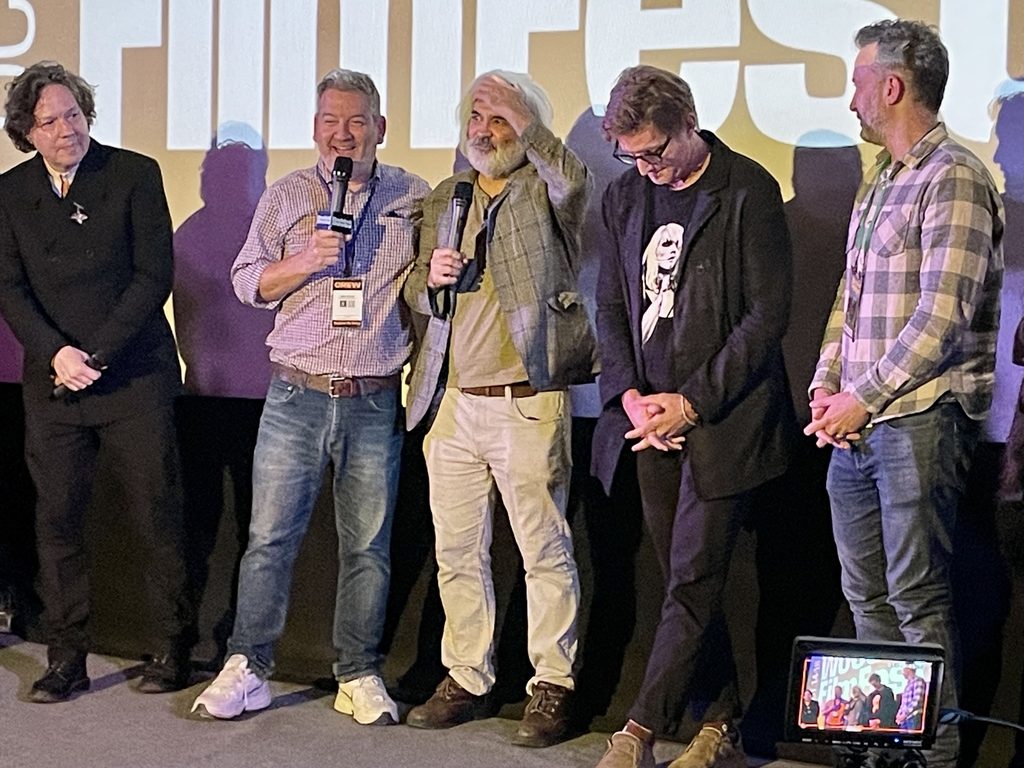
(left to right: Dave Hill, moderator Adam Schartoff, director Onur Tukel, Paul Sparks and Eddie Kaye Thomas)
After the Q&A we headed to Onur’s party at the nearby Station Bar & Curio (101 Tinker Street)
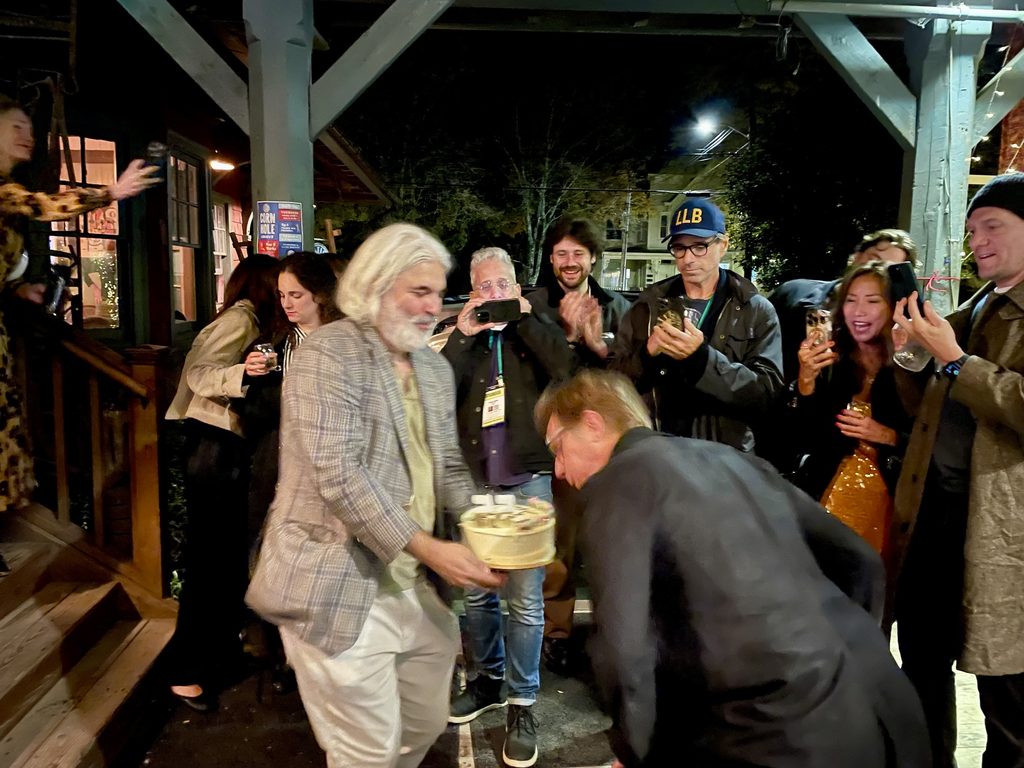
Onur presented birthday boy Paul Sparks with a cake (delicious and it came from Woodstock’s own Overlook Bakery.) I kept trying to remember what I had seen Paul Sparks in before. Later I recalled that he was a regular in the HBO series “Boardwalk Empire.” Onur picked up the tab for all of the drinks and supplied ten large pizzas.
I spoke to many of the actors from the film: Eddie Kaye Thomas (he played Finch in the 1999 comedy “American Pie” and his famous line from the film was “God bless the Internet!”); Jamie Block; Ariel Kavoussi (I loved her 2017 film “The Poet and the Professor” and she is working on a new film; I’ve seen an early cut of it now and it is very funny); Hanna Mae Lee (turns out she acted in the “Pitch Perfect” films and is also a fashion designer); Dave Hill (he worked on an HBO show called “Reverb” when I worked there and we talked about that). Corbin Bernson was at the bar and I spoke briefly with him again. I also ran into Raj Trivedi, one of the producers of “The Natural State,” and we had a nice chat and I talked to Julia Schnarr, a director friend of Onur’s who owns a film production company called Sunbeam Productions.
Saturday, Oct. 18
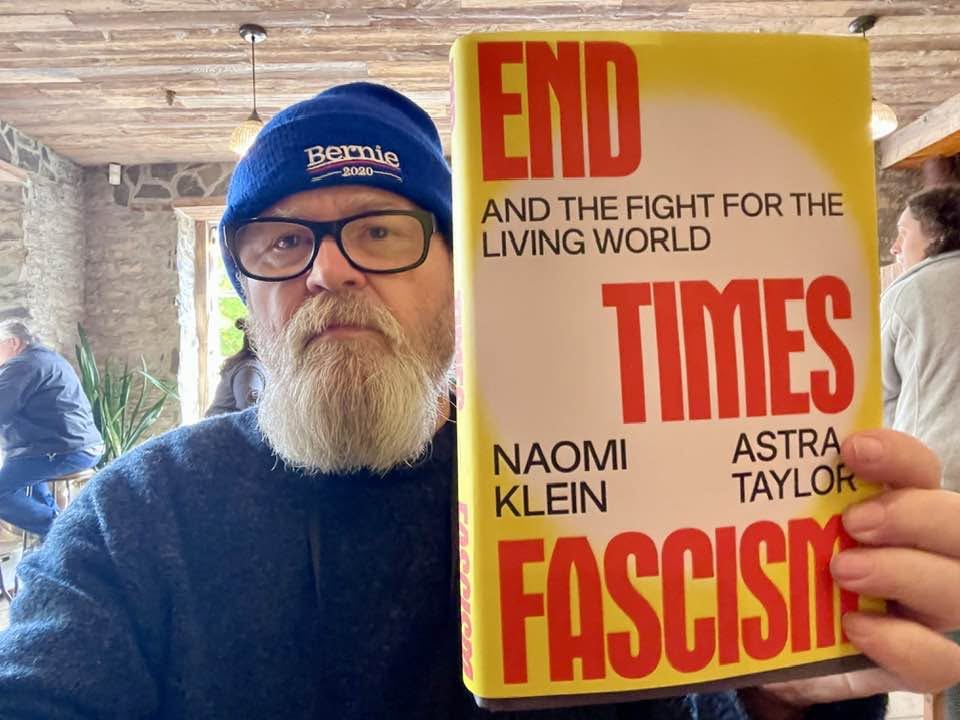
Adam works at the Kingston Farmer’s Market on Saturday mornings so I had to rise early and go there with him. (Kingston is about 22 miles from Athens where Adam lives and 11 miles from Woodstock.) While Adam sold vegetables I hung out at Rough Draft Bar & Books (82 John Street), a great bookstore only a few yards away. I drank coffee and perused some books, including this new one by Naomi Klein and Astra Taylor. I’ve met Astra a few times and once sent her a copy of Chris Marker’s great 1977 doc “A Grin Without a Cat.”
The bookstore began to get crowded and noisy so I wandered around the neighborhood. The city was celebrating the October 16, 1862 “Burning of Kingston” by staging a reenactment of the American Revolutionary War battle in which British General John Vaughan attacked and burned more than 300 buildings in Kingston, New York, then the capital of New York State.

American revolutionary soldiers. And Redcoats in the video below:
I walked further and discovered a wealth of historical information such as this landmark in Black American history:
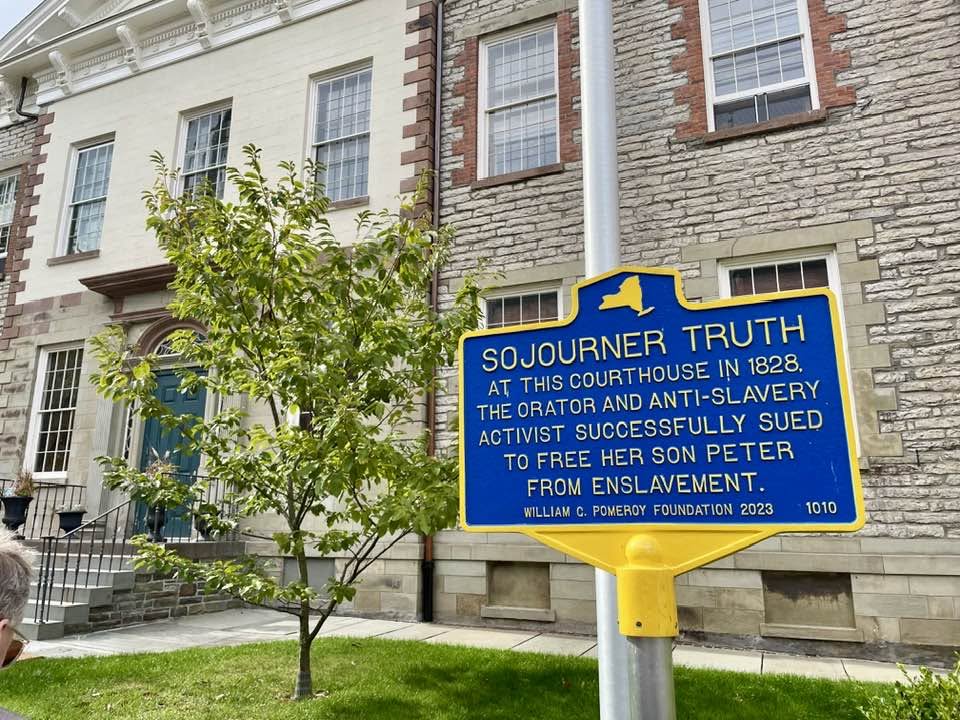
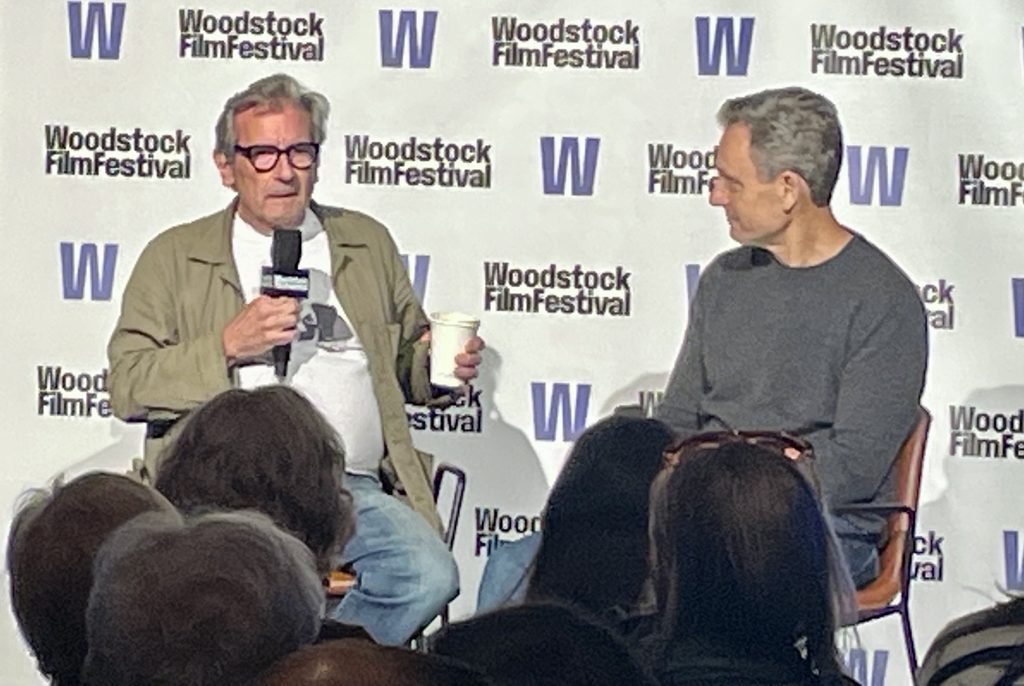
The farmer’s market closed at 1 p.m. and we dashed back to Woodstock. We caught just the first few minutes of “In Conversation: Tony Goldwyn & Griffin Dunne, a panel discussion between these two longtime friends but had to hurry over to the Tinker Street Cinema for a flm Adam needed to see and moderate the Q&A for, “The Man I Love.”
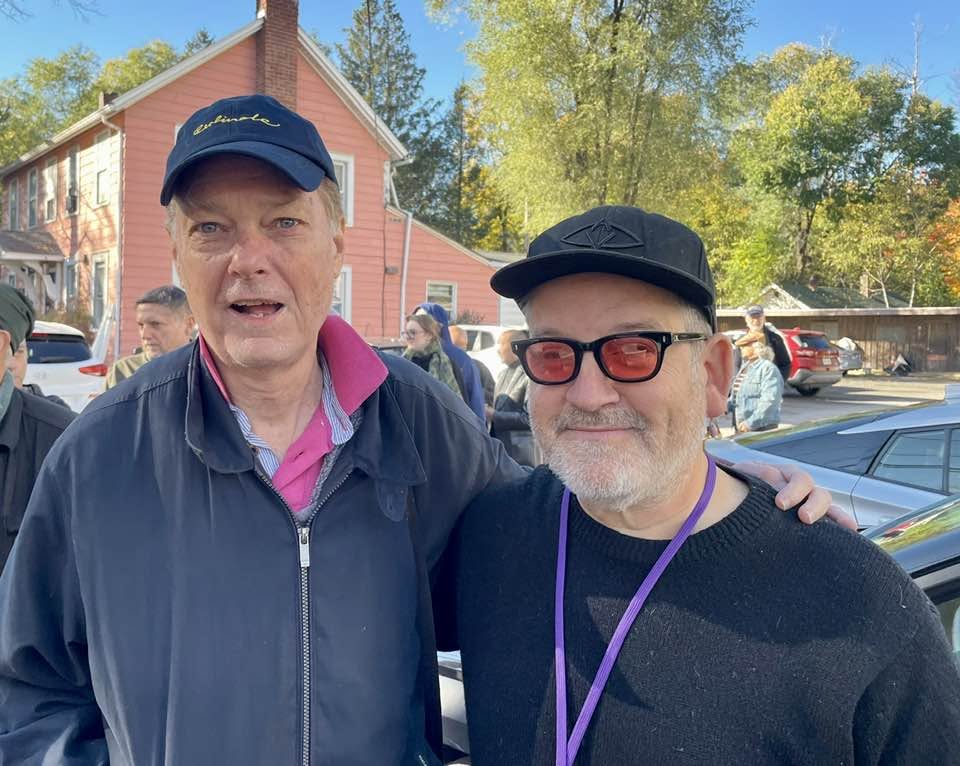
Waiting for the film to begin we ran into Bill Plympton. I asked him if he remembered a friend of mind who was a former student of his: Esther Bell. “Yes I do, how is she?” he asked. The last time I saw her was at her coffeeshop The West in Brooklyn but Adam told us that she has moved to Athens (where he lives) now and he has run into her several times when she participated at the “On The Fly” story slam his girlfriend helps run.
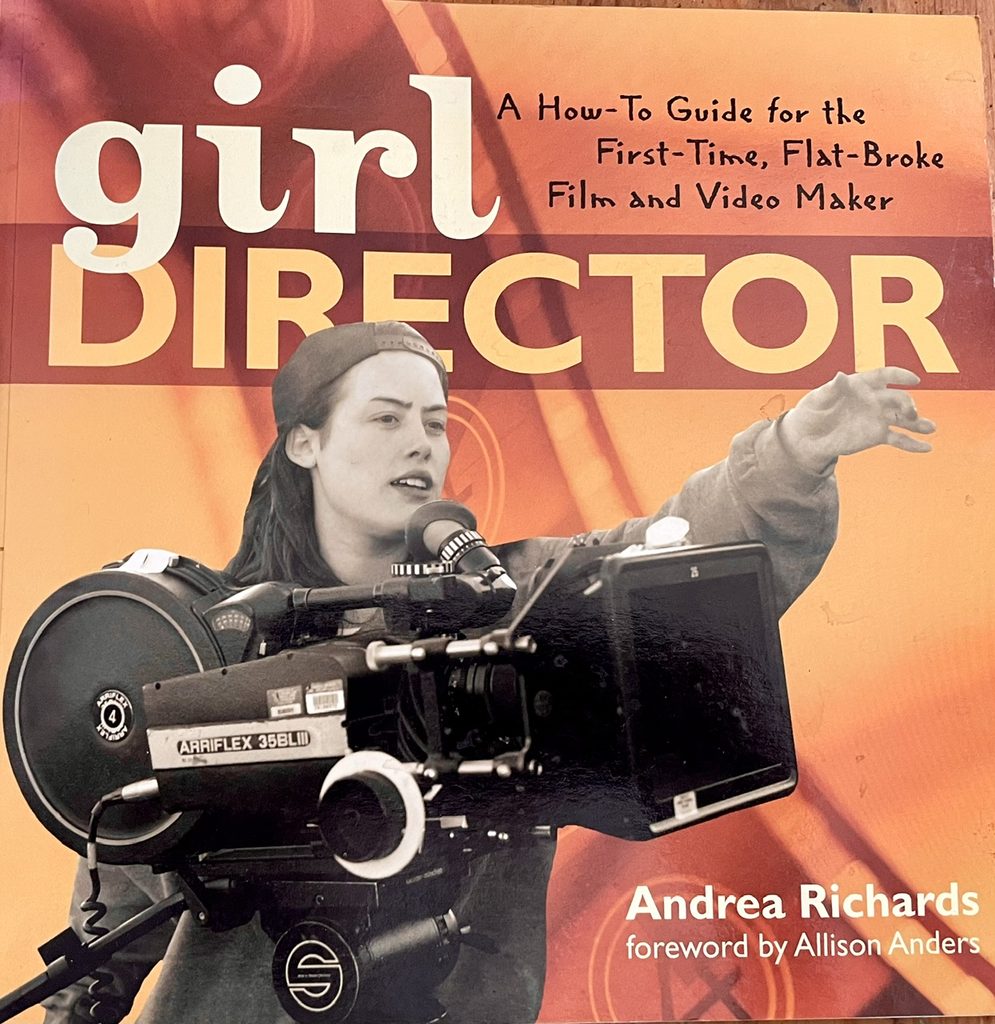
Esther directed several wonderful films including “Godass,” and “Exist.” She is also featured on the cover of the 2005 book “Girl Director: A How-To Guide for the First-Time, Flat-Broke Film Maker.”
An animated music video Plympton did for a music collective called Average Friends screened at the festival. Funded by a Kickstarter campaign, it’s a delightful, dreamy pop song and music video. The song s out now on Spotify, Apple Music and all major platforms. You can learn more at averagefriends.com and @average.friends on Instagram.
I was sitting next to Adam and Christina in the theater and thought the woman to my right looked just like the famous American/Russian journalist Masha Gessen. I asked her if she was Masha Gessen. She said she was. I told her I loved her work. (I haven’t read that much of it but I’ve read some of her pieces in the New Yorker and the New York Times and seen her many YouTube interviews with her.) “Thank you,” she said. Godfrey Cheshire later reminded me that she goes by “M. Gessen” now so that may explain why they didn’t say anything else to me.

Ira Sachs’ “The Man I Love” (co-written with Mauricio Zacharias, his frequent creative partner) tells the sweet and sour story of Peter George (Rami Malek), a gay downtown Manhattan stage actor who has just recovered from a bout of pneumonia. This is set in the 1980s at the height of the AIDS crisis; George’s sister (Rebecca Hall, who starred in Sach’s 2025 film “Peter Hujar’s Day”) is very worried about his health.
George’s long-time, long-suffering partner Dennis (Tom Sturridge) is also concerned and then angered when George takes on another lover, their new downstairs neighbor Vincent (Luther Ford), an ambitious but careless youth. Rami’s intense physicality is perfect for the part of a talented but narcissistic and risk-taking actor. In one great scene (watch below) he demonstrates how a woman would inhabit the role he is playing.
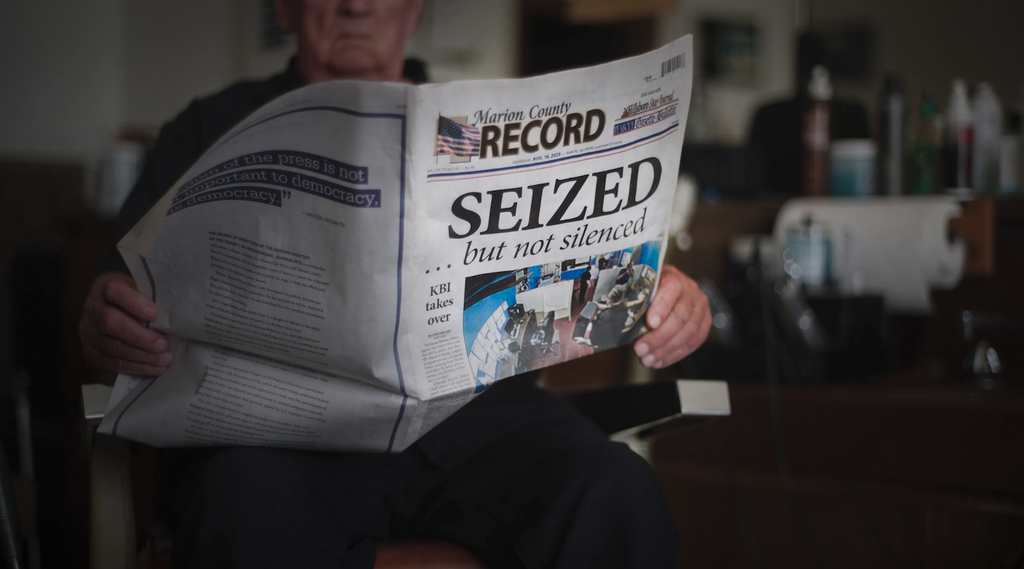
HBO screened an upcoming documentary about the police raid on a small newspaper in Marion, Kansas that made headlines all over the world. “Seized” investigates the August 11, 2023 searches conducted on the Marion County Record newspaper building and the home of editor Eric Myer. Police bodycam footage shows Eric’s 98-year-old mother Joan objecting harshly to the police entering her home and seizing their cellphones and computers. The next day she died; the coroner agreed that the stress of the previous day was a factor in her death.
The story became a spotlight on the growing threats to the freedom of the press in American. And the reason Police Chief Gideon Cody conducted the raids couldn’t be more petty and self-serving. We learn that Kari Newell, a local restaurant owner hosted an event for a state GOP politician. Reporters from the Marion County Record were asked to leave by Cody even though they had been invited to the event. After reading about this, one of Kari’s ex-friends contacted the newspaper with proof that she was still driving a car even though her license had been suspended for a DUI conviction.
Eric didn’t publish this information but reported it to the police. Cody, who we later learn had a romantic relationship with Kari, treated Eric’s account as if it had been gained by identify theft (even though the document sent to him was from a public website) and asked a judge for search warrants. These finger-pointing threads accumulate like new verses for the song “Harper Valley P.T.A.”
The experiences of a young, just-hired reporter for the Marion County Record, Finn Hartnett, are documented to contrast his experience of the town with the other reporters who had been working there for decades. He finds that there is a lot of hatred of the newspaper from locals, who think Eric is a bully who uses the publication to go after people he wants to target. (And they were “galled” when he won numerous journalism awards after the incident.) Other residents disagree and one woman says that “If we had been in a bigger city, nobody would care.”
Eric and other employees of the newspaper sued the county and the city. Last year they got an over $3 million settlement; other lawsuits are continuing. The current mayor of Marion also characterizes Eric as a “bully.” But Eric says “Show me a beloved newspaper man and I’ll show you a shitty paper. But it does wear you out.”
Directed by Sharon Liese, this is a well-crafted and well-researched documentary about not only the importance of the freedom of the press but the gradual disappearance of local news outlets. It also makes great use of many songs by cult musician Moondog in the soundtrack!
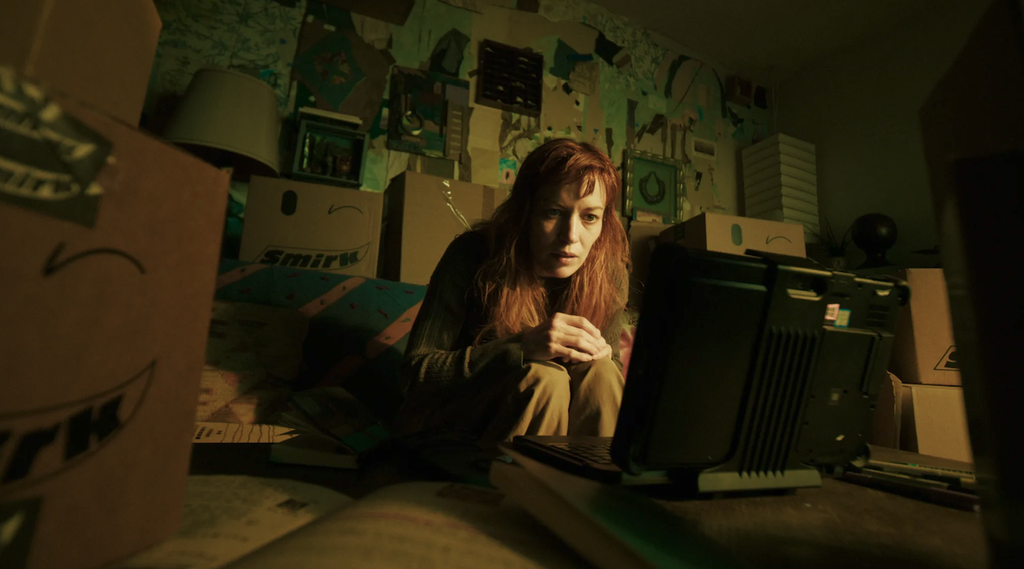
Adam also did the Q&A for Russell Goldman’s “Sender” a wild, sci-fi film edited in a maniacal, whirling dervish style that wouldn’t work without the strong performance of Britt Lower (“Severance”). Lower plays Julia, a recovering alcoholic in Santa Clarita who begins receiving packages she didn’t order. The delivery man (David Dastmalchian) looks into the orders from Smirk (an Amazon placeholder) and agrees they weren’t ordered by her. The packages keep coming: protein powder, a blender, cymbals and drums. Her paranoia increases when she finds reviews of the products with her name and account which she didn’t write. She goes so far as getting a job as a customer support employee with Smirk to try to get to the bottom of this. “Sender” is both a cautionary satire about the way we all become dependent upon a few online retailers and also an allegory about the delirium often experienced during alcohol abstention.
At one point in the Q&A Britt talked about how a past memory might influence a present or future moment. “Is there a name for that?” she asked. (And deja vu is not what she was thinking about.) I know the answer to that, I thought, but couldn’t remember. It was only later that I recalled that in the film “Rehearsals for a Revolution,” the filmmaker discussed the Iranian concept of “yad.” It’s the Persian word for memory and I can’t remember exactly how she discussed it in the movie but I saw later that Alissa Simon, in her review of the film for “Variety” explained that “she plays with the Iranian concept of yād, which encompasses both memory and how the past returns to mark the present.” And Goldman announced that his film will be released in April 2027.
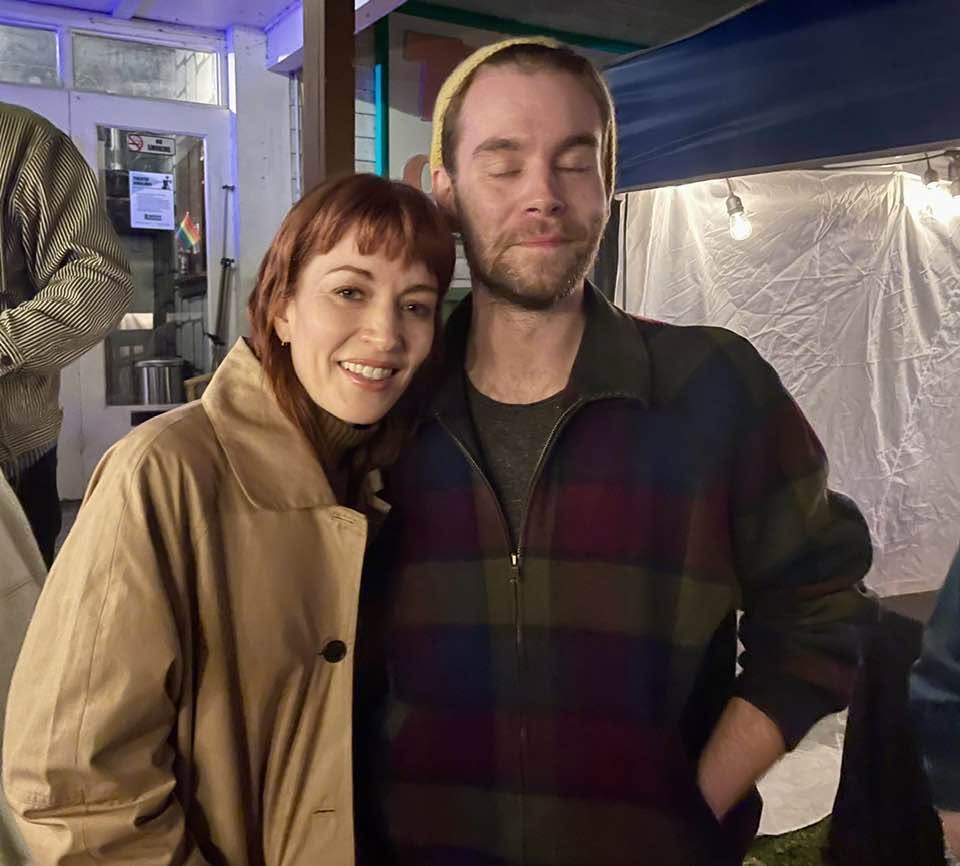
I caught up with the director after the Q&A and told him I thought the film may, like David Robert Mitchell’s 2018 cult masterpiece “Under The Silver Lake,” inspire a reddit-based community of fans searching for easter eggs and alternative meanings. He told me that Mitchell’s film was the one he asked Britt to watch before doing his movie! Here’s a photo I took of them after the Q&A. Sorry that Russell Goldman’s eyes are closed. Let’s pretend he’s dreaming about his next film.
Sunday, Oct. 19
Adam went to the festival awards brunch this morning. I didn’t have a ticket to that so he dropped me off at the hospitality house. Not a lot of folks around on this, the last day of the festival. I overheard a small panel talk given by producer Jason Kliot (“Enron: The Smartest Guys in the Room,” “Coffee and Cigarettes”) about how to pitch films.
Afterwards I talked to one of the attendees to the panel, Alexandra Lukina, a Russian-born filmmaker who now lives in Houston. She told me about the animated short she screened earlier at the festival and promised to send me a screener link later.

“Down the Hatch” shows us a little girl waking up in a world of simple and gorgeous line drawings and shades of black and gray. (The drawing style reminds me a bit of Ludwig Bemelman’s yellow and black-and-white illustrations for some of the Madeline books for children.) She discovers that her mother is trapped in a bottle of green liquid and breaks the bottle to set her free. The mother goes back into the bottle and her daughter spends a day taking very good care of the bottle as she visits a Public Aquarium (where bullies try to steal the bottle) and school (the principle confiscates the bottle). She eventually rescues her mother. This is a lovely and powerful allegory about parental alcohol addiction.
I sent my reaction to the film to Lukina and she emailed me back: “I wanted to show this green sticky substance as a symbol of addiction and you are [the] first person who noticed it.” Wow, I find that hard to believe.
At some point in my conversation with Alexandra, I mentioned the book I took to the festival with me to read, Thomas Bernhard’s 1983 novel “The Loser.” One of the Festival volunteers, a tall, young red-headed woman ran up to tell me how much loved Bernhard’s work. She is a student at Bard and for ten minutes we talked about literary fiction. She had read “Woodcutters” by Bernhard and many of the books by Pynchon and others I have read in the past few years. (I regret not writing down her name as I feel confident she–and apologies, I don’t know her preferred pronouns–will become a great fiction writer herself!)
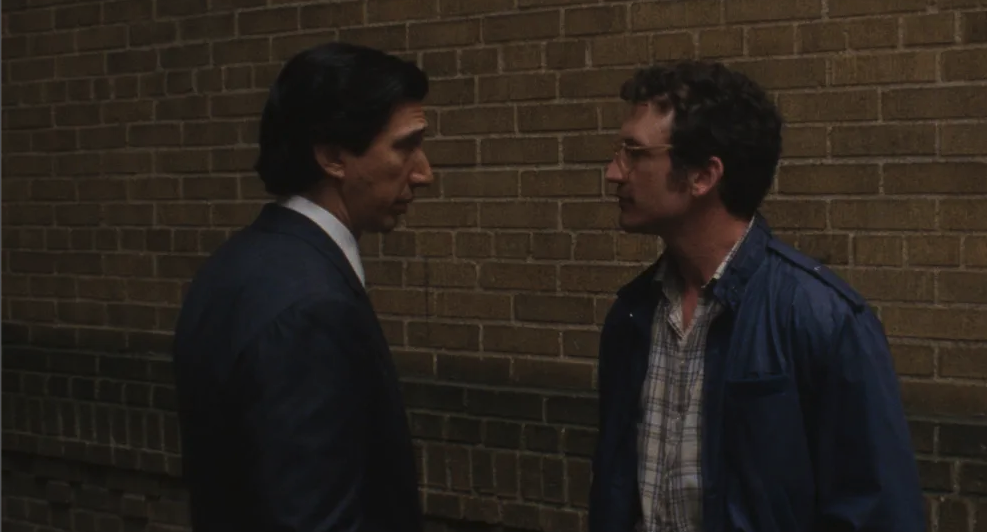
I walked the short distance to the Woodstock Playhouse to see James Gray’s new film “Paper Tiger“, which I had missed at the New York Film Festival. In the opening scene of this film set in 1986 Queens ex-cop Gary (Adam Driver) surprises his engineer brother Irwin (Miles Teller) by having a Peter Luger-catered steak dinner delivered to his family. Gary has a proposition for Irwin: team up together as a legal and technical consulting firm for the Russian mafia-run companies trying to cash in on the recently funded cleanup of the Gowanus Canal. At first the partnership is successful but smart but naive Irwin makes the mistake of taking his two sons with him for a night time inspection that goes horribly awry. The gangsters threaten him and his sons at knifepoint and later break into his house, leaving polaroids of the family sleeping.
Gary, overly confident (“I’ve got an army of cops behind me!” he screams after whipping two of the gangsters with his belt), confronts the mobsters who demand a huge settlement he can’t pay. He seeks helps from his former police colleagues only to find that some of them are already on the take with the Russians. Meanwhile the fear is especially rough on Irwin’s wife Hester (Scarlett Johansson), who has just been given a prognosis of brain cancer.
The filmmaking (including a bravura end sequence filmed in a field of reeds as Gary is chased by the Russian hoodlums) is brilliant and amongst Gray’s finest work and the three leads are all terrific in this poignant story of the American Dream gone wrong. From what I have read Johansson’s performance has inspired both raves and rants depending upon what you think of her character’s wigs and Jersey accent. I think she is great in what is clearly the American film of the year.
I walked back to rejoin Adam at the Overlook Bakery (105 Tinker Street) where he was recording an interview with the store owner for a food show (“Tasting Tuesdays“) he does for WKZE. I bought a coffee (Heavy Feather Coffee, excellent!), ate some of the peanut butter cookie that store owner Rosie DeVito game me and sat outside in what was gorgeous autumn weather. Random thought: I didn’t see a single feral cat in Woodstock. Whenever I go to a town and never see any feral cats I think of two possibilities: the people are so nice they adopt all of the feral cats. Or, they eat the feral cats.
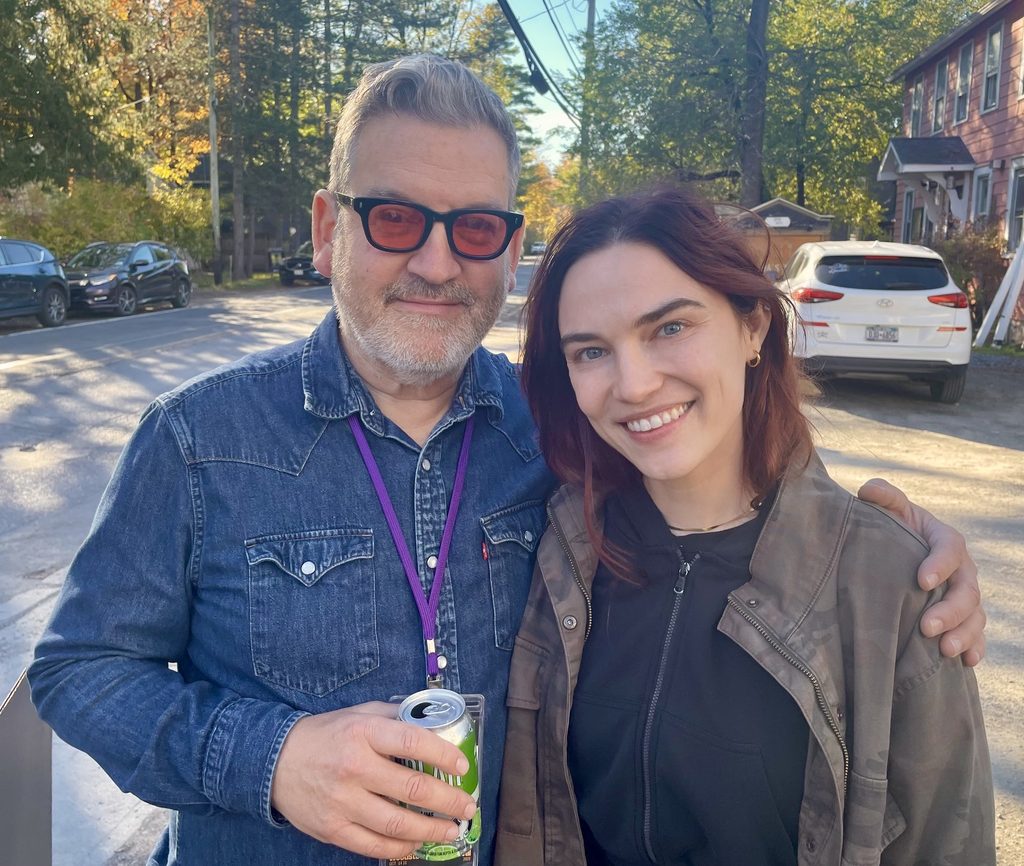
Adam and I walked to the Tinker Street Cinema one last time so he could say goodbye to some fellow festival crew members. We ran into the super-friendly Michelle Michalko who had been hired to manage the Tinker Street Cinema during the festival. She runs a digital marketing company in Kingston and is also an actress.
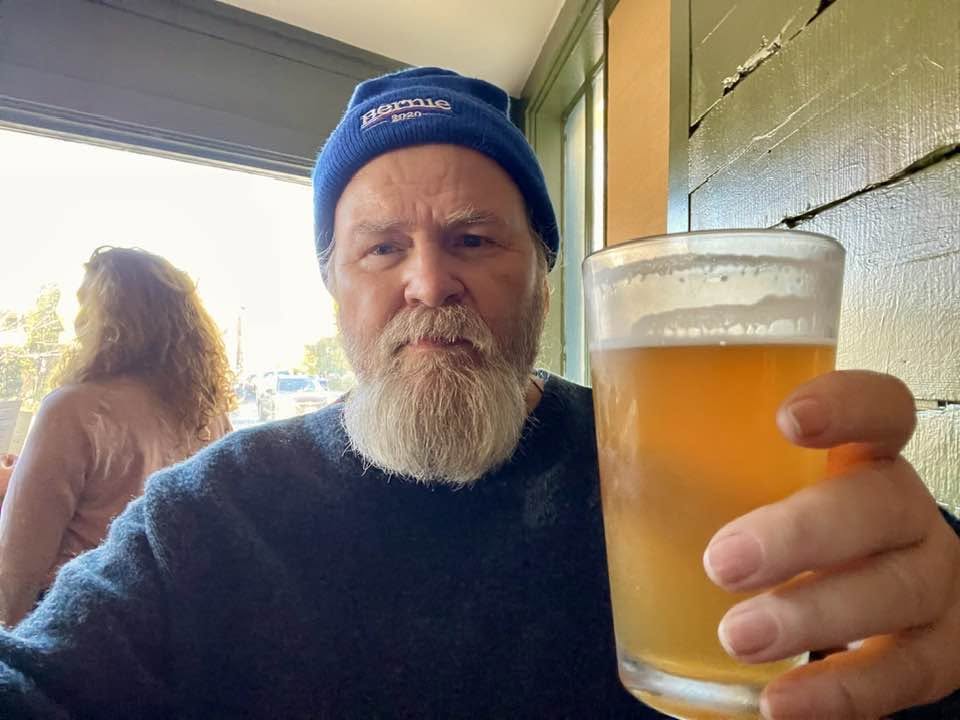
We walked around at the Woodstock flea market. I bought a bag ($5) of very savory honey mustard and onion pretzel pieces. Finally, Adam dropped me off at a CVS to buy seltzer for the bus trip. I had 20 minutes to kill. Near the bus stop (4 Mill Hill Road) there was a cute little bar called Small Talk (1 Tinker Street). I walked in and bought a Maine Lunch IPA. Another bar patron said “I like your hat” (“Bernie 2020”) and I told her “I like your Gloria Steinhem glasses.”
There is no bus station in Woodstock. You just catch the bus at a spot on Mill Hill Road. I noticed that Bill Plympton was taking the same bus as I again. He said he is going soon to a film festival in Latvia. We changed buses in Kingston. Traffic jams made the trip back over four hours. Adam had given me an extra pair of ear buds and I used them to listen to the latest episode of TCM’s “The Plot Thickens.” This season is about the life of Stanley Kubrick. When I got home to my apartment in Williamsburg I watched the latest episode of the great new limited series “American Hostage.” And then I fell into a deep slumber. Thanks for everything Woodstock Film Festival. I’ll definitely be back next year!